Summer Hunger Realities in Michigan

While many children eagerly await the end of the school year, the summer months bring added stress for a significant number of families facing food insecurity and hunger. Families often struggle to keep their children fed without access to free or reduced-price school meals. For low income households, who already face challenges putting food on the table during the school year, the summer makes an already difficult situation worse.

Keep reading to learn more about summer hunger and how you can give a hand up to help our children in need.

How Schools’ Help Lessen Child Hunger

Before diving into the challenges and effects of summer hunger, it is essential to understand the role schools play in fighting child hunger. 

The Food Research and Action Center’s (FRAC) article, “Benefits of School Lunch“ discusses the impact school’s have on child hunger, noting that  “receiving free or reduced-price school lunches reduces food insecurity, obesity rates and poor health.” When children receive free or reduced breakfasts and lunches at school their households’ spend less on food and can better afford other basic necessities like housing and healthcare. For families experiencing food insecurity, this is a crucial support. Food costs have risen while many families’ incomes have remained the same. Schools providing healthy, nutritious meals help decrease food insecurity in their communities, and ensure kids receive the nutrition they need to excel at school.

As FRAC notes, school meals also help improve students’ health. Fresh produce is more expensive than many other groceries and has a shorter shelf life, making it challenging for low-income families to purchase regularly. Schools are able to provide those essential fruits and vegetables for kids to give them the nutrients they need to lead healthy, active lives. Without proper nutrition, students struggle to focus and learn effectively. School meals are an essential program that feeds hungry kids and helps improve community food security.

Michigan Schools’ Programs

Michigan public schools guarantee two meals every day for all students through the Michigan School Meals Program which began during the 2023-24 school year. “The program provided over 76.3 million breakfasts and 135.6 million lunches,” to participating schools last year according to the Department of Education’s article, “Michigan Children Will Continue to Receive Nutritious Free School Meals in 2024-25.” As the article’s title notes, this program continued in the 2024-25 school year, building upon its impact.
Many nonprofits like TrueNorth work together with schools to feed food insecure children through programs like our onsite Food Center, Mobile Food Pantry, and Weekend Food Assistance program.

Summer Hunger Challenges

As seen above, schools play an integral role in fighting child hunger. This is why summer hunger is a prevalent concern in many communities. 

No Kid Hungry’s article, “Five Things to Know About Summer Hunger in the United States,” discusses how the end of the school year impacts children and families  financially: “Family grocery costs rise more than $300 a month when school is out and school meals disappear.” With the additional food costs, a high percentage of low income families are faced with challenging situations. No one should have to choose between paying utilities or medical bills instead of putting food on the table, but many do.

 Knowledge loss, often referred to as “summer slide”, is another consequence of summer hunger. No Kid Hungry notes in their article how children who face hunger and food insecurity are more likely to experience skill loss during the summer and often start the school year behind their peers. Even a few months of food insecurity can greatly impact kids’ physical and mental health, making the need for summer food supports essential in communities.

Effects of Summer Hunger

Summer hunger negatively impacts those experiencing it. Keep reading to learn more about the effects on kids’ health and school readiness and how you can help sustain our families.

Physical and Mental Effects

Kids need proper nutrition to learn and grow both physically and mentally. 

According to the article, “How Summer Hunger Affects Children,” by Feed the Children: “Even marginal food insecurity can be a significant predictor of poor health in children. Health issues like asthma, childhood obesity and diabetes can all be factors associated with food insecurity and lead to lifelong problems.” Children can receive negative health effects even if they experience hunger and food insecurity for a brief period of time. 

Kids’ development and overall well-being can also be negatively affected by summer hunger as FRAC’s article, “The Role of the Federal Child Nutrition Programs in Improving Health and Well-Being,” notes. They discuss how research links food insecurity with “lower health-related quality of life,” “lower physical functioning,” “developmental risk” and “mental health problems (e.g. depression, anxiety, suicidal ideation).” These health consequences clearly illustrate the need for food support for children and their families.

As noted above, children experiencing hunger also can face negative mental health outcomes. Feed the Children discusses how “not having food puts children at risk for increased behavioral and emotional problems.“ No child should have to worry about whether they will have enough to eat. These worries can put children at risk for anxiety, depression and even impact their relationship with food. Not only do children experience these outcomes, but their parents can also experience poor mental health as they try to make ends meet, as Feed the Children notes. This can also impact children as their parents’ mental health affects their abilities to take care of their kids.

All of these health outcomes demonstrate the great need for summer food support.

School Readiness Effects

Summer hunger impacts school readiness as well. No Kid Hungry’s article, “How Does Hunger Affect Learning?” explains proper nutrition is critical for school readiness: “Children’s learning outcomes suffer when they regularly experience hunger and that nearly every aspect of physical and mental function is hurt as well. Food insecurity affects concentration, memory, mood and motor skills, all of which a child needs to be able to be successful in school.” When a child is hungry, it is nearly impossible for them to focus on anything else. This hurts their ability to learn and retain information and skills, setting children experiencing hunger and food insecurity behind their peers.

The article further discusses how hunger hurts cognitive development and children’s mental health. These factors contribute greatly to the summer slide as kids are unable to maintain what they learned over summer break due to these health effects. For all of our children to succeed, they need accessible, nutritious food that fuels their brains and bodies.

For an in-depth look at child hunger, check out our blog post, “Child Hunger Causes and Impacts.”

Fight Summer Hunger in Your Community

You can make a real difference in the lives of children in your community by supporting efforts like summer meal programs and local food pantries. Whether you choose to donate funds, food or volunteer your time, your support brings nourishment and hope to those who need it most.

Join TrueNorth in Our Fight Against Hunger

At TrueNorth Community Services, we believe every child deserves to have healthy, nutritious food to live and thrive. We offer multiple programs to help our families put food on their tables while furthering themselves on their paths to self-sufficiency.

We work to meet people where they are through comprehensive programs and services. TrueNorth offers programs that reduce poverty and food waste, guide collaborative food security efforts and bring food and nutrition-related resources to those in need, such as:

We understand the need to feed local children during the summer. To help meet this need, TrueNorth partnered with Holton Public Schools for the second summer in 2024. Together, we distributed over 46,000 meals to area youth as part of the Meet Up and Eat Up initiative. We look forward to continuing this essential partnership for the third year this summer.

Join us in our fight against hunger by donating food, supporting our programs through monetary gifts or volunteering. We have a number of opportunities for you to make a life-long impact on our children and families.

Camp Newaygo Helps Young Women Flourish

Summer camps like Camp Newaygo provide life-changing opportunities for girls to grow into their best selves. While young women face unique challenges as they grow up, having positive learning experiences at programs like summer camps help them thrive while at camp and beyond.

Keep reading to learn more about the need for summer camps, their impacts and how you can empower the next generation of leaders.

Need for Summer Camps

In Anja Whittingon’s article, “Developing Noncognitive College Readiness Skills at Camp: Long-Term Outcomes,” she discusses the challenges girls more commonly face compared to their male counterparts. These can include “a lack of confidence in their academic abilities, higher levels of anxiety and depression, stress over their financial situation (the average income for female college students is lower than men’s), and lower rates of emotional and physical health.” Challenges like these can appear at young ages as Katty Kay and Claire Shipman discuss in their book, Confidence Code for Girls. Kay and Shipman note findings of a 30% drop in confidence for girls ages eight to 14. This drop in confidence negatively affects girls’ development and overall well-being.

Centerstone’s article, “It’s Time We Close the Confidence Gap Between Boys and Girls,” further discusses the confidence gap and why it exists: “Boys are generally encouraged to take risks and assert themselves, activities that inherently boost confidence. This difference in socialization emphasizes the need for intentional efforts to build girls’ self-assurance to level the playing field.” The way children are communicated to directly impacts their confidence and self-image. As Centerstone notes, this difference in communication needs to be intentionally addressed. This is why girls’ summer camps like Camp Newaygo, a program of TrueNorth Community Services, are essential for closing the confidence gap and showing young women what they are capable of.

How Camp Newaygo Meets this Need

Since 1926, Camp Newaygo has been rooted in tradition and grounded in a simple belief: every child deserves a safe place to grow. That belief continues to guide their work today—offering girls meaningful outdoor experiences, building confidence and creating a community where they can truly belong.

The 102-acre camp rests along Pickerel Lake in the Manistee National Forest, near the town of Newaygo, Michigan. This setting fully immerses participants in nature while they learn independence in a safe environment.

Camp Newaygo offers more than just a week away from home—it’s a place where girls can take healthy risks, try new things, and discover their own strength. With the support of caring, intentional staff, campers ages 7 to 17 build confidence, practice independence, and connect with others in meaningful ways. Each summer, girls from across the country and around the world come together to laugh, collaborate, and create friendships that often last long after the final campfire. The experience is playful and joy-filled but also deeply impactful. It’s not just about what they do at camp. It’s about who they become because of it.

Camp Newaygo’s programming centers around their value outcomes of resilience, independence and growth. With over 30 activities for participants to choose from, there are many opportunities for participants to learn new skills, find new passions, experience teamwork and foster community. From archery, gymnastics and pottery to photography and fishing, there are opportunities for all participants to excel.

By creating an environment focused on empowering and uplifting young women, Camp Newaygo continues to help grow thousands of strong, compassionate leaders.

Impact of Summer Camps like Camp Newaygo

The need for intentional spaces like Camp Newaygo has never been greater. Keep reading to learn more about how attending these programs can make life-long impacts on participants.

Health Benefits

Camp offers a range of health benefits for participants. The active, outdoor lifestyle supports improved cardiovascular health, muscle strength, flexibility and better sleep. But, the most lasting impacts are often mental, emotional and social. For many girls, camp is where they learn to manage anxiety, build resilience and feel a genuine sense of belonging.

According to the American Camp Association’s article, “Summer Camp as a Therapeutic Tool for Reducing Anxiety in Youth,” participating in summer camps can reduce anxiety in youth. This can be due to a number of factors the American Camp Association notes, including:

  • Being “a hiatus from technology and screen use”
  • Having “constant physical activity in primarily outdoor spaces”
  • Promoting “self-sufficiency and independence”
  • Living in a “community setting where they must learn to effectively communicate, share and co-exist with other campers of the same age.”
  • Encouraging “the formation of further friendships and social connections”

Having new, shared experiences with other participants creates a safe environment for girls’ personal growth. By building new friendships, girls also expand their support system as they learn to lean on each other whether it be for a group camp activity or when dealing with personal struggles.

Esther Kirchhoff, Roger Keller and Barbara Blanc’s further these ideas in their article “Empowering young people—the impact of camp experiences on personal resources, well-being, and community building.” The authors note how after attending summer camp “participants demonstrated increased empathy, emotional self-control, optimism, and assertiveness. Furthermore, the adolescents reported more positive emotions, higher self-esteem and stronger readiness to contribute to the community.” Overall, these outcomes point to the lasting impact camp can have on a girl’s sense of self and well-being.

Life Preparedness

Attending summer camp can also positively impact girls’ life preparedness. As discussed above, there are a number of social skills participants learn through camp activities. From learning how to live with and get along with others from different backgrounds to building self-confidence, summer camps foster crucial life skills young women need to succeed in life.

Whittingon further explains in her article how “experiences that offer opportunities to gain leadership, perseverance, communication skills, develop friendships, develop skills to deal with stress, help girls problem solving, gain confidence, and resilience may offer emotional support.” Not only do these experiences provide that emotional support, but they also are essential skills for excelling in college and beyond as Whittingon notes.

All in all, summer camps empower young women to grow into their best selves so they can thrive while at camp and beyond.

Support Camp Newaygo to Ensure Young Women Flourish

Camp Newaygo campers sitting on a bench.

At TrueNorth Community Services, we believe everyone deserves opportunities to receive help, connect and give back. There are a number of opportunities for you to make a real difference in the lives of young women by supporting Camp Newaygo.

Whether you make a donation or give back through volunteering, there are a number of ways you can transform lives. Support Camp Newaygo today and be confident you are ensuring young women flourish.

Plant a Row Nourishes Hope

Having access to fresh fruits and vegetables is key to healthy living. Unfortunately, a high percentage of people in our communities are unable to purchase these essential foods due to high food costs and lack of accessibility. This is why TrueNorth Community Services holds its annual Plant a Row for Hunger campaign–to inspire community members to take an active role in fighting food insecurity in their community.


Keep reading to learn more about Plant a Row and similar opportunities and see how you can nourish hope in our neighbors.


What is Plant a Row?


TrueNorth’s Plant a Row initiative aims to provide more fresh produce in its Food Center by encouraging farmers and gardeners to plant an extra row to donate. We have already distributed 800 seed packets to Newaygo County residents with the intention that the produce grown from those seeds will be donated to or used by those in need. Plant a Row also encourages people to donate any excess produce they have, regardless of whether they used seeds provided by TrueNorth.

Hands holding fresh tomatoes

Mike Voyt, TrueNorth’s Hunger Prevention and Children’s Services Director, explains the importance of this initiative: ” Plant a Row is a powerful way for our community to give families access to the nutritious food they need to thrive in every part of life.”

Food Center members at TrueNorth were also able to attend a seed starting workshop. This helps empower Food Center participants to grow their own gardens, so they have greater access to fresh produce.

Plant a Row is one example utilizing gardening to help those facing food insecurity. Learn more about other opportunities below.

Opportunities like TrueNorth’s Plant a Row Initiative

There are a number of ways communities can take an active role in fighting hunger through gardening.

Community Gardens

People planting in a garden

One of these ways is by starting, or participating in a community garden. Not only do community gardens provide spaces for those who may not have the space to start a garden, but it also creates a place for people to connect with each other. Elizabeth Waddington further discusses this in her article, “Tackling Community Food Security Through Gardening:” “Community gardens can take a wide range of different forms and make use of many different areas of land, both large and small. Community growing spaces of all kinds can bring people together to solve many of the different problems that a particular community might face.” Because of the versatility of community gardens, community members can use them as best suits their area’s needs.

Creating a more food secure community is one of the best reasons to start a community garden. This provides an opportunity for those facing food insecurity to take advantage of the space and expertise of their fellow gardeners. People can also donate to their local food pantries or personally give produce to those who need it. Ultimately, community gardens foster relationships while forming sustainable access to fresh produce.

Garden Sharing

Two women standing outside with gardening tools

Individuals can also take part in garden sharing. This method is similar to community gardening but at a smaller scale. Maybe a neighbor has the space for a garden but does not have the knowledge or means to grow one. They can invite others in their community to help with their garden and then share the produce grown, as Waddington explains in her article. This is a great method for those who live in apartments and have family or friends who have gardening space to share.

Gardening Groups

A group of young adults gardening

Forming gardening groups can also help reduce food insecurity in communities. Waddington notes that “local gardening groups of all kinds can be extremely beneficial in tackling community food security because they help to disseminate the skills needed for food production through neighborhoods.” By sharing knowledge with each other, community members can help each other’s gardens flourish.

Impact of Plant a Row and Gardening Initiatives

Programs like TrueNorth’s Plant a Row and other community gardening opportunities have great impacts on people facing food insecurity. This is especially true as those who struggle with food security lack access to fresh produce. While food pantries try to provide these options, it can be challenging due to the high cost and short shelf life. In order to help individuals become food secure, they need sustainable access to fresh, nutritious food, which is why gardening initiatives like Plant a Row are integral in the fight against food insecurity.

Participant Health Benefits

One of the most significant impacts of Plant a Row and similar gardening initiatives is improved health benefits for participants. In Matthew Solan’s article, “The best foods for vitamins and minerals,” he notes that “not only do they keep your body healthy and functional, they protect you from a variety of diseases.” Eating a variety of fruits and vegetables ensures people get healthy amounts of vitamins and minerals.

According to “The Nutrition Source,” “a diet rich in vegetables and fruits can lower blood pressure, reduce the risk of heart disease and stroke, prevent some types of cancer, lower risk of eye and digestive problems and have a positive effect upon blood sugar, which can help keep appetite in check.” Eating fruits and vegetables provides a number of benefits that are integral to a healthy lifestyle.

Community Investment

As seen above, fresh produce is essential for healthy living and should be accessible to everyone. This is where communities can make a real difference. Whether community members support nonprofit-led initiatives like Plant a Row or participate in community gardens and garden sharing, there are multiple ways people can take an active role in making their community more food secure.

Community investment in gardening initiatives and local food pantries will ensure those in need will have access to the nutrients they need to lead healthy lives. When people work together, good happens in communities.

Plant a Row to Nourish Hope in Our Neighbors

At TrueNorth, we believe everyone in our community deserves to have access to healthy, nutritious food to live and thrive. We strive to meet people where they are while furthering them on their paths to resilience, ultimately impacting lives for a lifetime.

Plant a Row donations are accepted during normal business hours, Monday – Friday from 8 am to 5 pm at the TrueNorth Service Center in Fremont. Besides Plant a Row, you can also nourish hope in our neighbors by making a gift or volunteering in our Hunger Prevention programs.

You can secure our community’s well-being. Not only will your produce donations sustain the hungry, but they will also let people know they live in a community that cares.

Membership Ensures Communities Flourish

Membership initiatives are integral to the sustainability and growth of nonprofits. Members give on a continual basis, making their commitment to the organization and their cause. Not only are membership programs crucial to nonprofits, but they also add value to those who give and their communities as a whole as people come together to improve their neighbors’ and community’s well-being.

Read below to learn more about membership and how you can get involved to ensure our communities flourish.

What is Membership?

Membership can take a variety of forms depending on the organization. For nonprofits, members tend to be donors who make a greater commitment to the organization. Typically, members receive benefits such as voting on the organization’s board members, receiving news and updates first and getting more of an “insider look” at the organization.

While these benefits are nice for donors to receive, they are rarely the reason donors decide to become members. According to Carter Skeel’s article, “In defense of membership programs,” “the act of giving expresses identification with a particular cause and a desire to join together with others in supporting it.” Donors give through membership because they believe in the cause the organization supports and the nonprofit itself. Members are the ideal donors of nonprofits because they have shown their commitment to their chosen organization helping nonprofits reach their goals of sustainability, donor engagement and community building.

Membership gifts are typically unrestricted, meaning nonprofits can use those funds wherever they need. This makes membership gifts invaluable to nonprofits because these gifts do not have restrictions that come from places such as grant funding. Having funds like this creates stable, sustainable funding for nonprofit organizations. Not only are these funds essential to nonprofits, but membership programs also build donor engagement and community as members interact more with each other and the organization as a whole.

Keep reading to learn more about the value of membership programs.

Why are Membership Programs Valuable?

Membership programs benefit donors, nonprofits and communities as people join together to support causes they are passionate about. Nonprofits rely on donors and their communities to help those in need. Ultimately, the partnership between community members and nonprofits creates positive change in communities, and membership is an effective avenue to accomplish that change.

Value to the Donor

Skeel further discusses why donors give through membership in his article: “Membership programs don’t motivate donors because they promise certain benefits—a book, a pin, a mug, and so on. No, they motivate donors through what those benefits convey about the importance of gifts at that level to the organization.” People give because they want to make a difference. When donors fully support a cause and find a nonprofit that does the same, they are likely to financially support that organization.

Membership giving opportunities align well with individuals’ desire to give back and help others. By supporting the organization as a whole, donors illustrate their trust in the organization and their dedication to the cause. Knowing their financial gifts are helping their neighbors and community inspires purpose and hope in their lives.

Value to the Nonprofit

Nonprofits benefit greatly from membership programs and gifts as well. As discussed above, having the flexible funding that comes from membership gifts promotes sustainability for the organization.

Donor retention (keeping donors from year to year) is also key to success for nonprofits and goes hand-in-hand with membership programs. HIVO’s article, “Maximizing Donor Retention with Charity Loyalty Programs,” explains how “donors who remain engaged over time can become more valuable to the charity. As they develop a deeper understanding of the organization’s mission and impact, they may be more inclined to increase their level of support or contribute in other ways, such as volunteering or advocating for the cause.” Members are ideal donors because they have already given a greater commitment, showing they are invested in the organization and its cause. Because of this, members are more likely to give year after year, further boosting the nonprofit’s sustainability as retaining donors is far more economical than finding new ones.

Not only are members essential to the financial sustainability of nonprofits, but most importantly, membership programs foster strong supporters who are invested in the cause and organization. Having support from community members allows nonprofits to build relationships and help even more people. Sometimes members will even volunteer their time, further impacting their community. However members give back, they continue to make a positive difference in their neighbors’ lives.

Value to the Community

Membership fosters community as people join together to support a cause they’re passionate about. This feeling of togetherness impacts communities overall as those who are involved in nonprofits tend to be more invested in their community as well.

Giving to nonprofits through membership can also add economic value to communities. In Barry Shore’s article, “The Impact of Giving Back: How Philanthropy Shapes Communities,” he states: “Philanthropy also contributes to economic development in local communities by boosting investment capital and creating new jobs. When people donate money or resources, they are indirectly investing in businesses that create job opportunities for residents. This influx of cash flow helps to fuel economic growth and stability in communities across the nation.” By giving through membership programs, donors impact their community overall as they invest in their neighbors and community’s development.

Read Kady’s story below to see the impact you can make in your community through membership.

Kady’s Story

Kady’s family was apart. While her children were staying in a safe place, Kady lived out of her car, searching for safe housing where they could all be together.

Thankfully, Kady came to TrueNorth and received multiple services to improve the well-being of her family. “It’s a blessing,” remarks Kady on the impact of the services and guidance she received from TrueNorth. “If TrueNorth wasn’t here I wouldn’t be here.”

TrueNorth placed Kady and her three children in a local motel where they could be together while Kady worked to find stable housing and a job that could support her family. Having guidance and encouragement from TrueNorth helped make this difficult time more manageable as Kady used her resources to move forward.

“Having her support and just knowing someone understood and can help…she never made me feel like I was asking for a handout, she gave me options and I explored my options,” reflects Kady on how her TrueNorth caseworker empowered her to advocate for herself and her family.

Kady was the one who found the place for her family with the support from TrueNorth. Having a new home for her kids relieved stress and anxiety from her as she was now able to look forward to her family’s future.

“My mental state, my anxiety…it was like way worse where I could function but I couldn’t process anything in my head because I didn’t know what was going on,” says Kady about the challenges she faced while finding housing. “I have peace of mind knowing we can all be a family and be together.”

Help Families like Kady’s through Membership

Today, Kady and her kids are safe in their new home because of caring supporters like you. Kady reflects on the impact of her time with TrueNorth: “I feel more stable, and I can push myself to actually do what I need to do instead of just stress…I’m very thankful for you guys.”

You can make a real impact on people like Kady. Not only will your membership gift help meet our neighbors’ needs, but it will also inspire hope for brighter futures. Learn more about membership opportunities below to make a difference today.

Transform Lives through TrueNorth Membership

TrueNorth offers a number of membership opportunities for you to invest in the well-being of our neighbors and communities:

  • Friend: $25 – $99
  • Patron: $100 – $499
  • Community Partner: $500 – $999
  • Community Pillar: $1000 – $4999
  • Gene Cotton Circle: $5000 and above

Membership means you are supporting all of TrueNorth’s programs and initiatives. Your gift will not only help those in crisis situations like Kady, but it will also ensure that everyone in our community has opportunities to receive help, connect and give back.

When you become a member at TrueNorth, you will also have the opportunity to vote in the election of TrueNorth’s Board of Directors. We value you and your support and know that the more we work together the more good we can do.

Further our mission of inspiring hope and creating a better world by becoming a member today, for Good Happens Here, but only if we make it happen, together.

National Volunteer Week Inspires Communities to Give Back

Volunteers are essential to vibrant communities. This is why National Volunteer Week is so important as communities come together to celebrate and encourage those who give back.

Read more to learn about the history and importance of National Volunteer Week, read stories of giving back and see how you can get involved this week and beyond.

What is National Volunteer Week?

This year is the 50th anniversary of National Volunteer Week–putting a spotlight on the impact and generosity of volunteers. According to GovInfo’s article, “History of National Service,” National Volunteer Week was established by President Richard Nixon in April of 1974 to celebrate volunteers and their impact. This movement has grown over the years as thousands of nonprofit organizations and communities throughout the nation recognize and inspire those who give back.

The 2025 National Volunteer Week will be celebrated from April 20 – 26 during Global Volunteer Month. Started by Points of Light in 2020, this global movement aims to further recognize and encourage volunteerism around the world. Celebrating throughout the month of April shows just how great an impact volunteers have on their communities as people gather together to thank those who continue to give their time to help others.

Importance of National Volunteer Week

Without caring people giving back, many communities would not have the support necessary to thrive. Volunteers make a difference in real people’s lives as they help fight food insecurity, guide the next generation, improve social health and provide essential resources among so much more. Nationally, “over 28 percent of Americans volunteered through an organization between September 2022 and 2023, an increase of five percentage points from the historic low documented in 2021,” according to AmeriCorps’ Volunteering and Civic Life in America Research Summary. This growth illustrates how more and more people recognize the benefits giving back has on their communities and even their own lives. See AmeriCorps’ chart below for a more detailed look at how people are engaging with their communities:

A line graph showing the National Rates of Civic Behaviors from 2017 through 2023


In Michigan, AmeriCorps notes that “2,141,460 formal volunteers contributed 138,630,397 hours of service through organizations worth an estimated $4.4 billion.” These statistics highlight just how great an impact volunteers have on their communities and the state of Michigan overall. Not only is National Volunteer Week a great time to reflect on volunteers’ contributions and positive effects but it also is an opportunity to further those impacts as we encourage others to give back too.

Read the stories below for an in-depth look at why people volunteer and how their lives and communities have been impacted by their service.

Stories of Giving Back

People can give back through a variety of avenues. One thing remains constant, however; volunteers continue to help those around them, ultimately improving the well-being of their communities.

Volunteer working with kids at TrueBlue Academy.

Suzie’s Story

“It’s all about relationships,” reflects Suzie on her experience working with the kids at TrueBlue Academy. “Sometimes it’s opening up with some troubles, but often it’s also opening up to have fun and have fun with other kids. A lot of the kids we have in TrueBlue have had troubles with bullying, and so they’re very cautious with other students.”

Suzie has been volunteering with TrueBlue Academy for over a year. After teaching for 30 years, Suzie wanted to find a way to continue supporting area kids,
and she found a great way to give back at TrueNorth.

TrueBlue Academy is a part of TrueNorth’s youth mentoring program, TrueMentors. This program provides students in need of extra encouragement with group mentoring programming once a week during the school day. The program is run by TrueNorth staff with support from participating schools’ Resource Officers and volunteers like Suzie.

Being able to build trust and support kids at TrueBlue has been one of the most rewarding parts for Suzie. She says, “I like being in the classroom, and I like helping other kids and teachers. It’s a lot of fun, and I hope that we can make a positive experience for those kids who may be struggling.”

Take a look at the video below to hear more about Suzie’s experience volunteering:

Smiling woman in a red shirt.

Diane’s Story

“I like talking to people, and I know how lonely sometimes I get,” says Diane, a TrueNorth volunteer, about why she decided to volunteer for Call & Connect. “If they don’t have somebody to talk to then I said, ‘I might as well be trying to make a smile on their face, especially if they don’t get out.’”

Call & Connect is a volunteer opportunity that pairs volunteers with older adults in Newaygo County who would benefit from extra social interaction. This initiative aims to spread kindness and encouragement through a simple phone call, helping everyone feel a part of our community.

Diane is one of the first volunteers for Call & Connect. She also participates in Community Connections programming and understands the importance of socialization and relationships. Diane says, “If they know somebody else is out there that cares, maybe it will help them feel better.”

Although Diane is just starting to volunteer for Call & Connect, she is looking forward to continuing conversations and building relationships. These conversations not only impact those who are called but will also impact callers like Diane as they engage with each other.

“I want to try to be an encouragement to other people,” says Diane. “It’s a good thing to do to help brighten somebody else’s day.”

Check out the video below to hear more about Diane’s impact:

Encourage Others this National Volunteer Week

You can ensure our neighbors thrive this National Volunteer Week and beyond. Whether you thank a volunteer or give back yourself, you can help inspire hope and resilience in your community. Learn more about how you can get involved at TrueNorth Community Services to make a difference below.

TrueNorth’s Volunteer Opportunities

At TrueNorth, we provide opportunities for everyone in our community to receive help, connect and give back. We offer a number of volunteer opportunities for people to renew purpose and help those in need, including:

  • Agency Support
  • Camp Newaygo
  • Community Connections
  • Hunger Prevention
  • Youth Mentoring
  • Special Programs & Events
  • Call & Connect

You can transform lives just like Suzie and Diane. By coming together through volunteerism, we can secure the well-being of our neighbors and communities. Support our volunteers and give back today to be confident you are strengthening Michigan communities.

The Arts Bring Rural Communities Together

Art brings people together. Whether through music, theatre or the visual arts, rural communities that prioritize the arts receive numerous benefits.

Unfortunately, there are challenges rural communities face continuing and growing arts opportunities. Keep reading to learn more about the importance of the arts in rural communities and how prioritizing the arts can bring individuals and their communities even closer together.

A Look at Arts in Rural Communities

According to Mallory Shotwell’s article, “How Art Makes Us More Human: Why Being Creative is So Important in Life,” art’s “power lies in its ability to inspire, create joy and provoke thought. Art is an expression of the human experience, and its value lies in its ability to bring people together.” This sentiment illustrates the value the arts bring to individuals and their communities. For rural areas, this is especially important as these communities typically have less opportunities for the arts and connection in general than urban areas, making arts initiatives even more essential to build and sustain vibrant communities.

Rural economies are one of the main contributing factors to there being less arts opportunities available. The report, “Rural Prosperity Through the Arts & Creative Sector,” produced by the National Governors Association (NGA), National Endowment for the Arts and the National Assembly of State Arts Agencies discuss what challenges rural communities face when concerning the arts: “Many rural areas have unique cultures to celebrate, yet they are also contending with problems related to an evolving economy, including the loss of industry, outmigration of young and skilled workers, rising poverty rates, health and health care barriers, educational attainment gaps and physical and digital infrastructure needs.” With rural communities facing economic challenges, especially households living in poverty or with low incomes, the arts tend to not be a community priority.

Rural residents already face challenges such as lack of affordable housing and food insecurity, making the arts seem like a luxury they cannot afford. Unfortunately, this mindset overshadows the benefits individuals and communities can gain through the arts. Read below to learn more about the positive impacts art can have on rural communities and their residents.

Impact of the Arts in Rural Communities

The arts have a number of impacts on both individuals and communities. From individual health benefits to strengthened community connections, art can positively affect rural communities.

Individual Benefits

Individuals involved in the arts receive a variety of benefits ranging from improved physical and mental health to renewed purpose and expression.

Physical health benefits come from more active arts engagement such as dance and music. According to Gwendolyn Rugg, Jennifer Novak-Leonard and Michael Reynolds’ article, “The Outcomes of Arts Engagement for Individuals and Communities”, physical health improvements such as hormone levels, blood pressure, mobility and cognitive function can be improved through the arts. The article also notes that older adults who engage in more active arts participation receive health-boosting effects that help lessen their risk of “developing cognitive or physical health problems as they age.” These benefits show how the arts can influence health outcomes.

Along with physical health benefits, the arts also can impact individuals’ mental health. The Mental Health Foundation explains these benefits in their article, “How arts can help improve your mental health.” The article discusses how “engaging in the arts can help with major challenges, such as aging and loneliness. It can help to boost confidence and make us feel more engaged and resilient. Besides these benefits, art engagement also alleviates anxiety, depression and stress.” These benefits are extremely essential to the well-being of rural communities as residents face mental and social health challenges. Having avenues to express their emotions, share their stories and connect with those around them, creates both positive bonds and improved self-confidence.

All of the benefits discussed above also impact communities overall as healthy and engaged residents are key parts of vibrant communities. Read about Hanna, a TrueNorth Cultural Arts’ participant, below to see how arts programming has made a real difference in her life.

Hanna’s Story

Girl in a pink sweater at Camp Newaygo for TrueNorth's Art In program.

“Working with art as much as possible at any opportunity that I can, I grab at that no matter what it is, because there’s just very little opportunities in general,” says TrueNorth Cultural Arts participant, Hanna, about her excitement to be involved in the program.

Hanna is a senior at Fremont High School and attended her first Art-In and Art Contest & Exhibit at TrueNorth Community Services last year. Having the opportunity to hone her artistic skills at the Art-In and then display her work at the Art Contest & Exhibit has helped Hanna grow.

The Art-In was led by a previous art educator in Newaygo County who taught area students how to make creatures out of clay, allowing them to be creative and innovative with their projects. Not only did the Art-In provide Hanna with a creative outlet, but she was also able to apply the skills she learned in the pottery class she took the previous year.

Hanna enjoys working with a variety of mediums and styles of art. She submitted a portfolio featuring four different pieces to the 2024 Art Contest & Exhibit, including: a mixed media sculpture, a needle-fiber piece, an anime drawing and a ceramic mug shaped like a fox. Displaying her work at the exhibit was a great opportunity to share her work and see her peers’ pieces.

TrueNorth’s Cultural Arts programs have given Hanna more chances to explore different forms of art as she looks to apply for art school. She says, “So thinking like a year from now when I’ll be applying for art schools and all that, it’s a huge step forward if I can keep practicing consistently.” Hanna’s goal is to work in the animation industry, and she is grateful for all of the opportunities she has to grow as an artist.

Community Benefits

Rural communities experience a number of benefits from the arts. As seen above, the arts foster connection, helping residents feel invested in their community. Experiences like community art programs and projects bring people together with a common goal of creating art. The more involved community members are in their area, the stronger their relationships with the community, others and themselves will be.

There are also economic benefits to the arts. Many rural Michigan towns are tourist destinations that bring in revenue especially during the summer months. Having local arts opportunities encourages more people to visit and engage with the community, making it more likely for those visiting to come back again. This also promotes further connections in communities as residents engage with new people.

Support the Arts in Rural Areas

You can inspire young artists like Hanna. Whether you get involved in the arts in your community, donate to local programs or advocate for arts initiatives, you can help build vibrant communities. Learn more about TrueNorth’s Cultural Arts initiatives below.

TrueNorth’s Cultural Arts Initiatives

At TrueNorth, we strive to provide opportunities for community members to express themselves through the arts. Our initiatives focus on youth to ensure every kid has the opportunity to learn and grow in the arts. We offer a variety of programming as seen below:

  • Middle and High School Student Art Trips to Museums and Exhibitions
  • Guest Artist Workshop through the Art-In
  • Newaygo County Art Exhibit and Art Scholarship Contest at TrueNorth
  • Visiting Artist Workshops in each Newaygo County Middle and High School
  • Piano Showcases on TrueNorth’s Steinway Piano

Each of these initiatives provides area kids with new experiences to learn, practice and perform different types of art.

“Anything artistic I also feel like obviously it’s a creative outlet but it allows people to sort of express themselves more than what words would,” reflects Hanna on how TrueNorth’s Cultural Arts programs have helped her express herself. “There are just emotions that you cannot capture properly as you would with like images or a 3D model.”

You can enrich the lives of young artists like Hanna by getting involved at TrueNorth. Make a caring gift or volunteer today to build and sustain vibrant communities.

Food Affordability and Accessibility in Rural Michigan

Rising food costs and the increased cost of living continue to affect Michigan residents. This need for affordable and accessible food is even greater in rural Michigan communities as residents face unique challenges.

Keep reading to learn more about food affordability and accessibility, their impacts and how you can help your neighbors in need.

Food Affordability and Accessibility

While closely tied together, food affordability and food accessibility have different meanings and impacts. According to Jess Carson and Sarah Boege’s article, “The Intersection of Food Availability, Access, & Affordability with Food Security and Health,” food affordability can be defined as “the ability to purchase enough safe and nutritious food given demands on household income outside of food.” As this definition notes, the additional costs of essentials such as housing, heat, energy and healthcare also need to be considered when determining if food is affordable. Keeping the quality of food in mind is also important because everyone deserves to have the ability to purchase nutritious food for healthy living. It’s also important to consider food quality because everyone deserves access to nutritious food for a healthy life.

In contrast, food accessibility means “the ability to obtain food free from barriers posed by travel time, physical features of the area and store, neighborhood safety and transportation costs,” as defined by Carson and Boege. This definition speaks to the challenges rural Michigan communities face. A high percentage of rural individuals and families face barriers to purchase the food they need. From a lack of public transportation to limited store options where they can travel, there are a number of factors that affect if food is obtainable.

Read below to learn more about food affordability and accessibility in rural Michigan communities.

Rural Food Affordability

As discussed in the definition above, food affordability takes into account more than the cost of food itself. This is especially the case for rural residents as they face greater transportation barriers, higher housing costs and limited store options compared to urban residents. Carson and Boege further note the differences in food affordability in rural versus urban areas: “One national study found that households in rural counties spend 19 percent of income on food compared to 17 percent in urban counties. The same study found that compared to urban counties, rural places have lower household incomes, lower access to food retailers, higher shares of poverty and lower average SNAP benefits per participant—all of which were found to contribute to lower food affordability.”

Even in rural communities with lower living costs than urban areas, the gap between household income and the cost of food and essentials still creates a financial burden. This underscores the urgent need for food support to ensure residents have access to proper nutrition.

Below are four charts that show the living wage calculations and costs of typical expenses for Newaygo County households in 2024 and 2025. This data was gathered by The Living Wage Calculator and was last updated in February 2025. We selected Newaygo County because it is one of TrueNorth’s primary service areas, serving as a snapshot of rural communities in West Michigan.

2024 Living Wage Calculation for Newaygo County

Newaygo County 2024 living wage calculation, showing food affordability and accessibility.

2025 Living Wage Calculation for Newaygo County

Living wage 2025 calculation table, showing food affordability and accessibility.

2024 Typical Expenses for Newaygo County

2024 typical expenses chart for Newaygo County.

2025 Typical Expenses for Newaygo County

2025 typical expenses data chart for Newaygo County.

Comparing 2024 to 2025 data shows an increase in required incomes and costs across multiple areas. Both food and housing costs have risen which means individuals and families will have less to spend on other necessities. While this is a broad estimate of the living wage and expenses for Newaygo County residents, these charts illustrate the financial burden rural residents face.

Rural Food Accessibility

Accessible food is critical to the health and well-being of rural residents. There are a number of factors that impact food accessibility as Isabella Pinerua discusses in her article, “How can we define food access?.” Pinerua further defines food accessibility as she breaks it down into three categories: economic access, physical access and social access.

Having economic access to food means individuals and families have the financial means to purchase food and the necessary materials to cook and eat it, as Pinerua defines in her article. This goes hand in hand with food affordability because if food is unaffordable then it will not be easily obtainable. Economic access should also not be limited to the cost of food itself, but it should also take into account the financial burdens that come with transportation to grocery stores such as gas and car payments. As noted earlier, rural areas tend to lack public transportation and are also spread out, making it challenging for people to buy food if they do not have access to transportation.

Transportation is also a factor when evaluating physical access to food. With limited grocery store access in small towns, people must decide between closer stores with higher food costs or larger stores with lower prices that are further away. Carson and Boege further emphasize the importance of transportation on food accessibility, stating: “Research consistently identifies transportation as a meaningful element of food accessibility, linking both lack and cost of transportation to food insecurity.”

Lastly, we should also consider social access when defining food accessibility. This takes into account the social, cultural and political factors associated with buying food as Pinerua notes. Social access will vary based on the communities’ and households’ cultures and social norms.

Impacts of Rising Food Costs

Rising food costs also impact food affordability and accessibility. According to Taryn Phaneuf’s article, “Food Prices Climbed 31% In 6 Years. Here’s Why,” food prices have risen 31% since 2019, as the title notes, and continue to rise because of “the combined impact of rising operating costs, supply-chain disruptions and corporate profits.”

Operating costs influence food prices. These costs can include: employees’ salaries, equipment purchases and maintenance, raw material purchases and fuel for vehicles, as Phaneuf explains. Combined with unavoidable events such as the COVID-19 pandemic and recent bird flu outbreaks, certain prices for items like eggs have drastically increased. Some corporations have added to this strain by raising prices and selling products in lower quantities for the same price to increase profit.

As food costs continue to rise, keeping food affordable and accessible remains a challenge, especially as incomes stay the same. This is why TrueNorth provides comprehensive Hunger Prevention programs and services to ensure no one in our community goes hungry. Learn more about these services and how you can help below.

Nourish Hope in Our Neighbors

You can help ensure everyone in our community has access to healthy, nutritious food. Whether you volunteer at a local food center, donate food or advocate for those in need, you can nourish hope in our neighbors.

Check out TrueNorth’s opportunities to make a difference below.

TrueNorth’s Hunger Prevention Programs

At TrueNorth, we believe everyone in our community deserves to have access to nutritious food to lead active, productive lives. We meet people where they are to help fulfill their needs while furthering them on their paths to self-sufficiency.

We offer a number of programs and services to provide our neighbors with the resources they need:

  • Feeding thousands of individuals and families at our on-site Food Center
  • Partnering with Feeding America West Michigan for a monthly Mobile Food Pantry
  • Providing food to hundreds of students on the weekend through Weekend PowerPacks
  • Gathering seniors together for a meal and socialization at our Senior Thanksgiving Luncheon

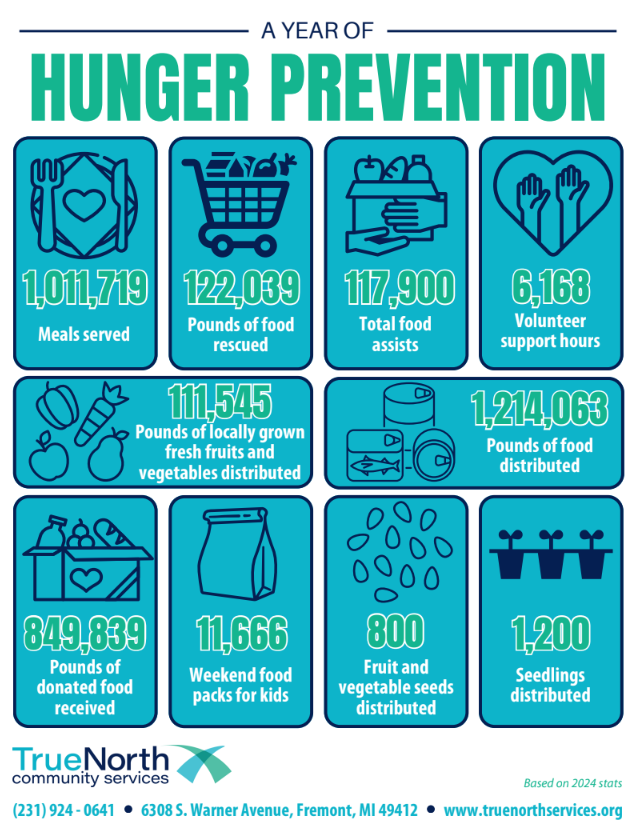
TrueNorth even works with local farmers and receive donations from individuals to provide fresh produce in our on-site Food Center. Through our food rescue initiatives, we collect food that would otherwise go to waste from large businesses in the community. Our goal is to build and sustain vibrant communities where everyone can thrive.

Take a look below to see how we helped our community in 2024:

2024 TrueNorth Hunger Prevention program statistics sheet.

You can continue these impacts when you get involved today. Make a caring donation or volunteer today to ensure our community flourishes. You can personally offer a hand up to our neighbors, ultimately impacting their lives for a lifetime.

Youth Mentoring Programs Support Michigan Kids

Positive influences are integral to children’s development and overall well-being. This is why youth mentoring programs are essential to many kids’ growth and happiness. Having a support system kids know they can rely on allows them to flourish and become their best selves.

“I think it’s a really important program not just for the kids but also for the adults because, I think, it helps kids and adults stay in touch,” says TrueNorth volunteer mentor, Cathy, about the importance of the program she’s seen through her mentorship with her mentee, Cora. “I think it’s just an extra level of fun and it’s maybe nice sometimes to have somebody to talk to who’s like a third party but cares about you.”

Read below to learn about the need for mentoring programs, types of programs and their impacts and how you can step in and support the next generation.

Need for Youth Mentoring Programs

Many kids are in need of positive role models. According to MENTOR’s study, “Who Mentored You?,” by Micheal Garringer and Chelsea Benning, about 1.8 mil­lion young adults ages 18 to 24 nationwide ​“not only didn’t have a men­tor but couldn’t nom­i­nate any­one they felt was a mean­ing­ful per­son in their lives.” Garringer and Benning define a meaningful person in their study as “anyone with whom you spent time or who did a lot of good things for you, not including your immediate family or people that lived inside your home.” This definition was included in the study to ensure participants in the survey would include relationships outside their family that impacted them if they would not have initially described that person as a mentor. The study illustrates the need for mentoring nationwide to help ensure every child has a meaningful, supportive person in their life.

Michigan’s Need

In Michigan, there has been an increase in youth with mentors over the past few years, whether through a program or informally matched in the community. According to the Kids Count Data Center, funded by the Annie E. Casey Foundation, in 2022 to 2023, 94% of youth ages 14 to 17 report they had at least one mentor in the community who provides guidance. This statistic represents “youth ages 14 to 17 whose parent reported that there is at least one adult outside the home, in the youth’s school, neighborhood or community who knows the youth well and who can be relied on for advice” as Kids Count notes. In contrast, in 2016 to 2017 only 89% reported the same thing. While these numbers seem high, there are some disparities in access to mentoring opportunities.

Garringer and Benning’s study also found that youth living in poverty or rural areas were less likely to have mentors than those in higher income households and urban communities. This shows the importance of having programs like TrueNorth Community Services’ TrueMentors program that serves Newaygo County youth where there are high percentages of kids living in poverty in the rural community. Keep reading to learn more about the types of youth mentoring programs available and how they support local kids.

Types of Youth Mentoring Programs

There are a variety of youth mentoring programs available in Michigan. For the purposes of this article, the types of programs TrueNorth Community Services offers will be discussed, including: Community-based, School-based and Outdoor-based mentoring. Each program type works to support local youths’ development, providing encouragement and enriching experiences to set kids up for success.

Providing opportunities to connect with mentors and peers is essential to helping kids grow into their best selves. This is seen in the article, “Adolescent connectedness: cornerstone for health and wellbeing,” by Robert W Blum, Joanna Lai, Michelle Martinez and Cassandra Jessee, as they discuss how youth programs that emphasize human connectedness are the most effective in supporting youth’s health and well-being. The article defines connectedness as “a sense of being cared for, supported, belonging and closeness with others that comes from protective and sustained relationships within families, schools and communities.” While each type of mentoring program has unique characteristics from the others, all three program types emphasize relationship-building and connection to fully support youth. Learn more about these programming characteristics below.

Community-based Mentoring

Community-based mentoring matches kids with volunteers from the community. With TrueNorth’s program, matches meet about four times each month and spend a minimum of eight hours monthly together. This helps kids quickly form strong relationships with their mentors. Not only do youth receive the support they need, but they also become more involved in their communities as mentors take them on new experiences.

Blum, Lai, Martinez and Jessee discuss in their article how youth experiencing stronger connections with their community helps their growth. They note, ”For adolescents, such community connectedness is influenced by the quality of youth-adult interactions, opportunities for meaningful input into community affairs, a sense of safety in the community and being welcome in public spaces.” Having another trusted adult kids know they can rely on helps strengthen both their feelings of community, especially when mentors show that community is a priority in their own life. Ultimately, these mentoring relationships provide the support kids need to grow into the leaders of tomorrow. Take a look at Cora’s story below to see how her mentorship has impacted her.

Mentor with her mentee at a community festival.

Cora’s Story

“Crazy fun,” is how Cora describes her relationship with her mentor Cathy. The two are an active match. From going to the beach, seeing sand dunes and being in nature to baking and doing a variety of crafts, they enjoy getting out and being creative.

Cathy especially enjoys these activities with Cora as she sees the world through her eyes. She says, “When we’ve gone to the beach, we go and we jump in the waves and when I go to the beach by myself, I sit there and read a book…It’s just a lot more fun to have Cora to do it with.”

Sharing these experiences with Cora has been extremely rewarding for Cathy. She sees Cora’s imagination at work whenever they are together and encourages her to explore new things. All of Cathy’s support has created a safe space for Cora to learn and grow.

“Sometimes like I don’t have anyone to do things with…she’s nice and likes to do crafts,” says Cora about why she enjoys her mentorship with Cathy. Not only do Cora and Cathy share similar interests, but most importantly, they also have cultivated a strong relationship–ultimately helping Cora flourish.

School-based Mentoring

School-based mentoring programs like TrueNorth’s TrueBlue Academy and Lions Together allow kids to build relationships with their peers and mentors. Having a supportive environment where youth can learn and practice interpersonal skills, explore career paths and learn more about their strengths and interests helps kids grow into caring, confident leaders.

In these programs, kids interact with others they may not have classes with, helping broaden their friendships and perspectives. In doing so, youth have stronger relationships along with good social and emotional health as Blum, Lai, Martinez and Jessee note in their article. Having the opportunity to meet with mentors and peers during the school day helps kids become more connected and successful at school. Check out Jace’s story below to learn how his time at TrueBlue Academy has helped him grow.

Two students participating in TrueBlue programming at Newaygo Middle School

Jace’s Story

“It’s made me more friends,” says sixth-grader Jace about how being in TrueBlue Academy has impacted him. “I have a lot more confidence when I walk; I’ll have a little more pep in my step. I’m a little more confident. I’ll raise my hand more.” Being a part of TrueBlue Academy has given Jace the extra support and encouragement he needs to excel both inside and outside the classroom.

Jace has been participating in TrueBlue Academy for over a year and continues to grow socially, emotionally and academically through the program. He enjoys all the different activities and lessons, especially projects and games that involve teamwork. Spending this extra time with mentors and his peers has helped Jace regulate his emotions and be more mindful of those around him.

Officer Blake, the school’s Resource Officer, who also helps as a mentor at TrueBlue Academy, remarks on the growth he’s seen in Jace: “Self-control and awareness of other people and just overall respect for others, I’m seeing big jumps with him.” Knowing he has a support system at TrueBlue Academy has given Jace the encouragement and security he needs to thrive.

Outdoor Based Mentoring

Outdoor-based mentoring in programs like TrueNorth’s Parks in Focus program gives youth opportunities to connect with nature, peers and mentors. This program also teaches kids photography skills as participants go on outdoor outings and learn to become comfortable within nature, through the lens of a camera. For many kids, these are places they may otherwise not have the opportunity to go to such as Michigan State Parks and National Parks

According to Danielle Cohen’s article, “Why Kids Need to Spend Time in Nature,” “kids who play outside are happier, better at paying attention and less anxious than kids who spend more time indoors.” Not only does spending time outdoors impact youth’s mental well-being, but it also gives them opportunities to be creative and build confidence. Pairing time outdoors with group mentoring allows kids to explore safely, knowing they have the support of their mentors and peers. See how Parks in Focus has encouraged and supported kids like Neveah below.


Parks in Focus participant standing in front of a waterfall for youth mentoring programming.

Neveah’s Story

“I needed to basically get out more and just spend more time with, I guess myself,” says Neveah about why she wanted to be a part of Parks in Focus. “My favorite part was probably just meeting everyone and kind of making friends.”

While being away from home with kids she hadn’t met before was a little intimidating at first, Neveah quickly made friends and flourished. Being able to be in the moment as she went on hikes, swam and learned how to take pictures allowed Neveah to open up more.

Neveah’s favorite activity from the summer immersion trip was seeing all of the waterfalls. She even learned new photography techniques as she and the other kids had fun taking macro (up close) photos of raindrops after it rained one day. Most importantly, Neveah grew closer with the rest of the group as they learned and had new experiences together.

“I think I got to, I guess, learn how to interact with more people that I haven’t met before and just make friends a lot easier…I had a lot of fun,” reflects Neveah on what she learned from the trip. Building these friendships helped Neveah grow as she became more confident with her new support system.

Support Youth Mentoring Programs to Enrich Lives

You can make a real impact in the lives of kids like Cora, Jace and Neveah. Whether you donate or volunteer, you can brighten the futures of area youth. See TrueNorth’s opportunities below to make a difference:

TrueNorth’s Mentoring Opportunities

TrueNorth offers a variety of mentoring opportunities to volunteer in and support as seen above:


    • One-to-one mentoring relationships through Community Mentoring

    • Connecting youth to the outdoors through Parks in Focus

    • Mentoring at school through TrueBlue Academy and Lions Together

Volunteers are needed for each program to help guide and encourage local kids. You can provide the support youth need to live and thrive. Learn more about TrueMentors to see how you can help the next generation flourish.

Support Bowlapalooza and Make an Impact

Bowlapalooza 2025 flyer

You can also impact youth’s lives when you participate in Bowlapalooza. This fundraiser gathers kindhearted supporters together to raise money to support the connection of local youth with positive role models for TrueMentors. We will celebrate each person who raises $40 or more with a fun, free night of bowling at Fremont Lanes on the nights below:


    • Thursday, April 24th: 5:30 pm – 7:30 pm

    • Friday, April 25th: 5:30 pm – 7:30 pm

    • Friday, April 25th: 8:00 pm – 10:00 pm

When you participate in and fundraise for Bowlapalooza, you are making a commitment to area kids. Not only are you ensuring they receive the support they need to grow, but you are also letting them know they live in a community that cares. Enrich the lives of our kids when you register for Bowlapalooza today.

TrueNorth Day of Giving Strengthens Communities

TrueNorth Community Services is holding its fourth annual TrueNorth Day of Giving to support Michigan communities. This 24-hour fundraiser works to bring awareness to the needs of our neighbors, illustrating how we can join together to give a hand up to those in need.

In 2024, 80+ programs strengthened over 30,000 individuals in our communities. Keep reading to learn more about this impact and how you can help continue these essential supports.

Community Impacts

At TrueNorth, we believe everyone deserves opportunities to receive help, connect and give back. We provide a variety of programs and services aimed at moving our neighbors forward on their paths to self-sufficiency. Ultimately, our goal is to build and sustain vibrant communities where everyone thrives.

See a breakdown of our initiatives below to learn how we can work together to secure the well-being of our communities today and for years to come.

Housing and Energy Initiatives

According to James Krieger and Donna L Higgins’ article, “Housing and Health: Time Again for Public Health Action,” individuals that experience stable housing and energy resources maintain a better quality of life. Having these essentials greatly impacts community members’ well-being and the health of the community overall. Check out the immediate and long-term impacts below.

Immediate Impact:

  • Households with stable housing and energy experience improved physical and mental well-being.
  • People have secure access to cooking capabilities, proper medicine storage, necessary technology and home lighting.
  • Individuals receiving rent and/or utility assistance avoid financial crises.
  • People with secure housing will have less barriers when seeking employment.
  • Housed individuals are less likely to be exposed to harmful situations than those who do not have housing.
  • Children experience healthier development when stably housed with their parents.
  • Households remain warm and safe.
  • People that have their basic needs met are then able to take further steps towards self- sufficiency.

Long-Term Impact:

  • Individuals and families experience a better quality of life.
  • Households depend less on community resources for day-to-day life, allowing services to focus more on those in crisis.
  • People remain in their homes and experience less upheaval throughout their lives.
  • Households with stable housing and energy have more effective health recoveries and higher life expectancy.
  • Communities that integrate a housing-first approach to homelessness spend less overall on housing assists.
  • Housed individuals are more connected and invested in their communities.
  • Communities with energy-efficient households are better stewards of earth’s resources.
  • People will be able to prepare for unforeseen circumstances and live more sustainably.
Woman in a pink shirt sitting with her dog Otis.

“To be able to get into a place where I can maintain my bills, my car insurance, you know be able to go to my appointments, it’s life-changing,” reflects Michelle, a TrueNorth Housing Resource participant, on the impact having safe housing has had on her.

Last year, over 10,000 people like Michelle received the guidance and support necessary to lead healthy, secure lives. Please note, some service statistics may be duplicated due to participants accessing multiple programs. These supports include: Homeless Prevention Services, Permanent Housing Services and Housing Advocacy & Education Classes. All of these programs and services meet our neighbors where they are, ensuring everyone has the resources to lead safe, healthy lives.

Hunger Initiatives

When children and individuals do not have dependable access to nutritious food, their physical and mental well-being declines, according to Feeding America’s article, “Importance of Nutrition on Health in America.” Not only is food security essential to people’s health, but it also affects the community overall. See the impacts of food security below.

Immediate Impact:

  • Children develop physically, cognitively, emotionally and socially.
  • Children maintain a healthy relationship with food.
  • People have the nutrients necessary to prevent and manage mental health conditions.
  • Workers have the sustenance needed to remain healthy and productive.
  • Adults experience less health risk factors.
  • Elderly adults maintain better health conditions.
  • Families and individuals experience less financial stress.
  • Community members reach higher levels of education and employment.

Long-Term Impact:

  • Children succeed in school and transition well into adulthood.
  • Children that start with healthy dietary patterns are more likely to continue them as adults.
  • People experience a better quality of life through improved physical and mental health.
  • Community businesses retain productive workers.
  • Overall health care costs lessen for communities, businesses and individuals.
  • Elderly adults remain independent sustainably.
  • People with less financial stress support community businesses and causes.
  • Community members increase their income over their lifetime due to further education and employment opportunities.
Jackie standing in front of non perishable food items in TrueNorth's food center.

“If it wasn’t for TrueNorth I don’t know what I’d do. You guys have been lifesavers on more than one occasion,” says Jackie. “TrueNorth helps a lot more people than they know.”

Our Hunger Prevention Programs were accessed by people like Jackie seeking additional food resources over 85,600 times last year. Please note, some service statistics may be duplicated due to participants accessing multiple programs. This includes programs such as: On-site Food Center, Mobile Food Pantry, Senior Food Boxes, Weekend PowerPacks and Senior Thanksgiving Luncheon. These initiatives give our neighbors the hand up they need to build resilience and move forward.

Youth Initiatives

The Family and Youth Services Bureau describes how youth can be set up for success through connection with “family support, caring adults, positive peer groups, a strong sense of self and self-esteem and involvement at school and in the community.” Focusing on these areas allows youth to grow into their best selves in a supportive environment. Take a look at the positive effects of youth development initiatives on communities below.

Immediate Impact:

  • Youth experience a secure sense of belonging and a healthy mental state.
  • Youth envision a positive future and develop a sense of purpose.
  • Youth excel in educational and social experiences throughout their lives.
  • Youth develop socially, mentally and educationally.
  • Youth learn how to work with others by learning healthy communication and collaboration styles.
  • Youth experience a healthier lifestyle due to education and prevention programs.
  • Youth engage in creative thinking and problem solving that prepares them for their transition into adulthood.

Long-Term Impact:

  • Youth who experience team-building and leadership programs have an increase in confidence, perseverance and responsibility.
  • Youth mature into productive, well-rounded community leaders.
  • Youth that instill healthy living practices continue them into adulthood, helping reduce lifelong healthcare costs.
  • Youth become compassionate community leaders.
  • Youth with healthy family systems continue that cycle as they become tomorrow’s parents.
  • Youth who have quality educational experiences become skilled, employable adults.
  • Youth who experience healthy relationships and communication habits as children continue the trend as adults.
Student named Aiden wearing a blue sweatshirt, outside. - TrueBlue Academy. TrueMentors

“I feel more confident in myself as a person in general. It’s more easy to go out and talk to people,” says Aiden, a participant of TrueMentors, about the impact of the mentoring program.

In 2024, over 7,000 kids like Aiden received support from TrueNorth programs including: Out-of-School Time, Cultural Arts, Children’s Services, TrueMentors and Camp Newaygo (some service statistics may be duplicated due to participants accessing multiple programs). All of these programs aim to provide extra support and opportunities for youth, ultimately building the caring, confident leaders of tomorrow.

Community Building Initiatives

Having safe, welcoming spaces and enriching opportunities creates a community that thrives. According to the U.S. Centers for Disease Control and Prevention, people who experience quality social connections experience better health and feel encouraged to give back to their community. See below how community building initiatives strengthen our neighbors and communities overall.

Immediate Impact:

  • Community members maintain better physical and mental health when experiencing social connectedness.
  • Volunteers experience higher levels of happiness and connection to the community.
  • Volunteers multiply their impact on the community through their service and the cost savings they provide the nonprofits they engage with.
  • People create local networks in their community to stay connected in community happenings.
  • Individuals involved in the arts improve their personal well-being along with creativity and problem-solving skills.
  • Community and individual social capital enhances.
  • People become invested in solving community problems.
  • Community members work together to solve community issues.

Long-Term Impact:

  • People experiencing social connectedness have an increase of trust and resilience in their community.
  • Volunteers maintain improved health and well-being while also increasing the well-being of the community through their service.
  • Nonprofits integrate volunteers into the fabric of their organization.
  • Communities with informed individuals have a higher success rate of reaching their goals.
  • Communities integrating the arts experience an increased sense of belonging that sustains community cohesion.
  • Community development increases human and economic assets.
  • People experiencing high social connection have increased levels of self-esteem and empathy, creating confident, compassionate community leaders.
Woman in a blue shirt sitting at a table for Community Connections programming.

“After spending years in the apartment, you know, it’s kind of nice,” says Cindy, a Community Connections participant and TrueNorth volunteer. “Giving purpose and having someone to talk to is a plus and we all need that. Especially us because most of us live alone.”

Over 9,000 people like Cindy fostered connections, renewed purpose, expressed themselves and gave their time through programs such as: Volunteer Services, Community Connections, Cultural Arts and Camp Newaygo. Please note, some service statistics may be duplicated due to participants accessing multiple programs. Each of these programs allowed individuals to connect with each other and the community, helping build and sustain vibrant communities.

Support TrueNorth Day of Giving to Strengthen Our Neighbors

The 2025 TrueNorth Day of Giving fundraiser will take place on Tuesday, February 25. Our goal is to raise $10,000 to ensure everyone has access to the support and opportunities they need to live and thrive.

When you make a gift on TrueNorth Day of Giving, you are furthering our mission of inspiring hope and creating a better world. Not only will you be helping our neighbors improve their lives, but you will also let them know they live in a community that cares.

You can make a real difference. Your generosity will have a ripple effect as many who receive help later give back to those in similar situations. Make a kindhearted donation today and be confident you are making a meaningful impact.

Realities of Rural Michigan Renters

Safe, affordable housing is essential for the health and well-being of Michigan communities. Unfortunately, in many rural areas, there is a general lack of housing options and even less that are accessible to low income families.

Keep reading to learn more about housing accessibility and affordability in rural Michigan, its impacts and how you can help our neighbors secure the housing they need to thrive.

Affordable Housing Accessibility in Rural Michigan

A Look at Rural Michigan

According to Michigan’s Roadmap to Rural Prosperity, created by the Michigan Department of Labor & Economic Opportunity and the Michigan Office of Rural Prosperity, “rural Michigan is home to 20 percent of the state’s population and comprises nearly 94 percent of the state’s land area, boasting tremendous natural resources that provide sustenance to residents, drive our economy, are culturally significant and offer endless outdoor recreational opportunities.” This brief overview illustrates the significance of Michigan’s rural areas and communities. While the majority of the state’s population lives in urban areas, Michigan’s rural communities remain integral to the state’s prosperity.
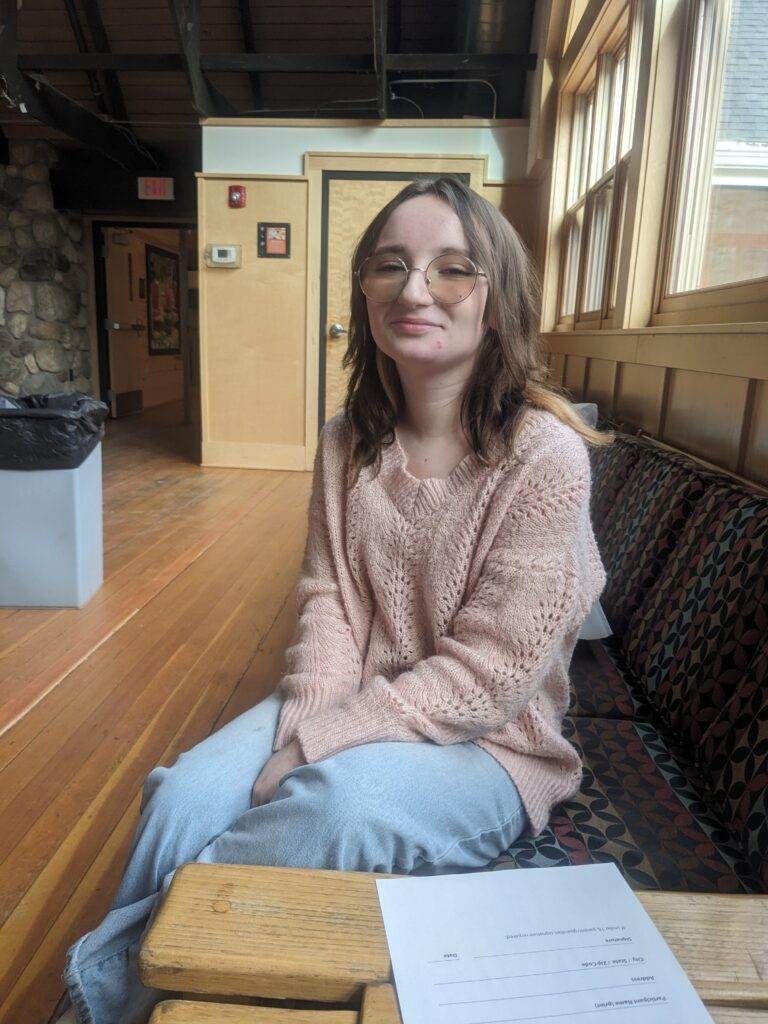
But, what does the term “rural” actually encompass? Michigan’s Roadmap to Rural Prosperity defines the term rural in three segments: “a deep connection to natural assets, being more geographically remote and smaller populations.” This definition shows the key characteristics of Michigan’s rural areas. Understanding these characteristics is integral to seeing the unique challenges these communities face.

Access to Affordable Housing

There has been a lack of affordable housing in both rural and urban Michigan communities. However, because of the nature of rural areas, these communities face unique challenges when it comes to finding housing.

Because urban communities hold more of Michigan’s population by a wide margin, there are more developments and housing options. While this logic makes sense, there are still disparities when it comes to finding affordable housing in rural communities. Even when accounting for a lower population density, there still is not enough housing in these communities.
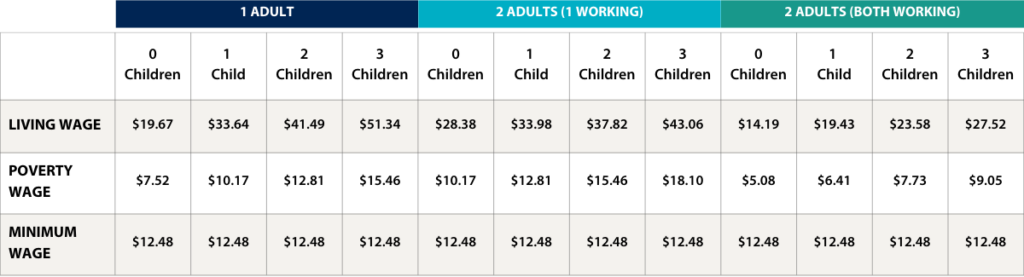
The National Low Income Housing Coalition breaks down a few of Michigan’s housing realities in the image below:

Key housing facts from the National Low Income Coalition.

These key facts highlight Michigan’s need for affordable rentals. Households who are extremely cost burdened spend more than half their income on housing, leaving little left to afford other necessities. These households are also at a higher risk for eviction as the National Low Income Housing Coalition explains. Unaffordable housing can lead to instability as residents struggle to stay in their homes or find housing they can afford. Low income rural renters face these risks as they work to secure safe housing that will help them move forward.

Rural Renting Challenges

Not only is it challenging to find available housing in rural communities, but there is also a lack of affordable housing. This is due to a number of factors such as residential construction lessening, household sizes shrinking, older residents aging in place and housing being converted to short-term and seasonal rentals as the Michigan Roadmap to Rural Prosperity describes.

The report goes on to explain how residential construction lessened after the 2008 recession, even with housing demands rising in rural areas. Household sizes have also been shrinking, which has not helped the need for more housing. The report says “with fewer people in each household, household growth continues even with a stagnant or declining population, and more homes are needed even for the same number of people.”

With many of the older residents choosing to age in place, there has been less housing turnover and availability overall as well. Plus, many rural areas have popular tourist attractions leading to year-round housing being transitioned into short-term rentals and seasonal properties. While the tourism revenue can help communities, the transitioning of these rentals does not help year-round residents looking for stable housing.

All of these challenges contribute to the housing needs in rural Michigan communities. Continue reading to learn more about the impacts of these factors.

Impact of Rural Renting Challenges

With the lack of rental availability and affordability, unfortunately, many people live in unsafe conditions because they cannot afford anything else. Safe housing is critical to people’s overall health and well-being. The National Center for Healthy Housing lists what makes a healthy environment in their article, “The Principles of a Healthy Home:”

  • Dry
  • Clean
  • Pest-Free
  • Ventilated
  • Safe
  • Contaminant-Free
  • Maintained
  • Thermally Controlled
  • Accessible
  • Affordable

All of these characteristics create a home where its residents can lead healthy, safe lives.

Not only are the physical characteristics of a rental important to residents’ health, but the affordability of the rental is also critical to their well-being. According to Opportunity Starts at Home’s fact sheet, “Healthcare Advocates Are Housing Advocates,” affordable housing is “a prescription for good health.” The fact sheet goes on to discuss how those whose rent is more than 30% of their income struggle to afford necessities such as food, transportation, childcare and healthcare. No one should have to decide between putting food on the table or paying rent. These impossible decisions have negative consequences on individuals’ health and well-being, making it even more challenging for them to move forward.

Unstable housing can negatively impact physical and mental health for children, adults and seniors. Children especially are impacted as housing instability leads to poor developmental outcomes that can impact them later on, as the fact sheet describes. Ultimately, healthy and stable housing is integral to individuals’ well-being.

Help Our Neighbors Find Safe and Affordable Housing

You can make a real difference in the lives of our neighbors. At TrueNorth Community Services, we believe everyone deserves to have dependable resources and live in safe environments. We meet the essential needs of our neighbors because all of our community members need help, safety and security to live and thrive.

How TrueNorth is Helping

Our Housing Resource Center meets people where they are to ensure they have safe, affordable housing. We offer self-sufficiency services alongside our housing support services to best set up our neighbors for long-term success. These housing support services include:

  • Securing housing for those in crisis
  • Assisting households to find safer, more affordable housing
  • Helping low-income households remain in their homes
  • Providing emergency home repairs
  • Providing foreclosure prevention counseling and pre-purchase homebuyer coaching sessions

All of these services ultimately work to keep our neighbors healthy and safe in secure housing. Take a look at Alyssa’s story below to see how these services can change the lives of our neighbors.

Alyssa Secures Her Home with TrueNorth’s Support

For TrueNorth Housing Resource Center participant, Alyssa, receiving support and guidance from TrueNorth moved her and her family forward.

Alyssa first came to TrueNorth because she was unable to afford her rent. She worked part-time to give her time with her two children, but work had become inconsistent for her husband. With the day-to-day expenses combined with rent, Alyssa’s family did not have enough to stay afloat.

Thankfully, Alyssa came to TrueNorth and received rental assistance along with guidance from her caseworker. From creating a realistic budget and seeing where her money had been going to setting short-term and long-term goals, TrueNorth has given her the tools to become more self-sufficient.

During this time, Alyssa searched for a full-time job that fit into her children’s schedule. She eventually found a third-shift job that fit her family and financial goals. These pieces coming together helped relieve the stress Alyssa faced, allowing her to be more present with her family.

Alyssa says, “When you’re really stressed for money and financial stability like every other aspect of your life including like the relationships with people in your home and your children and everyone, it just seems like it can be too much. So now that I am at the point where we are like financially secure, I know that I have a paycheck coming that’s enough to like cover my bills and expenses…it’s easier to maintain.”

Now, being at the end of the program, Alyssa is confident about her family’s future. She has started her new job and is taking steps towards the goals she and her caseworker created.

“I have a plan to hopefully buy the house that we’re in now by next year and I feel like that’s attainable, versus fearing being evicted,” says Alyssa.“It really helps set me up and get me in the proper mindset to be able to go out and continue to do this every single day and keep those short term and long term goals.”

How You Can Offer a Hand Up

You can make a real difference in the lives of people like Alyssa. Whether you donate, volunteer or advocate for those in need, you can be confident you are impacting lives for a lifetime. Get involved with TrueNorth today to help strengthen our neighbors and communities.