

 TNLisaDaniell
Social Prescribing
Social Isolation is the objective lack of social contacts and relationships. If that’s the problem, Social Prescribing is definitely one of the solutions. Pioneered in the UK, Social Prescribing addresses the root causes of poor health, such as loneliness, debt, or isolation. It does so by focusing on social and emotional needs, rather than just medical symptoms.
Continue reading more about the health risks associated with social isolation, the history of Social Prescribing and how TrueNorth’s ENGAGE! program is using it to help older adults in Newaygo County build new social networks.
The UK Model
According to (National Health Services) NHS England, Social Prescribing is a key component of the UK’s Universal Personalised Care. It is an approach that connects people to activities, groups and services in their community to meet the practical, social and emotional needs that affect their health and wellbeing.
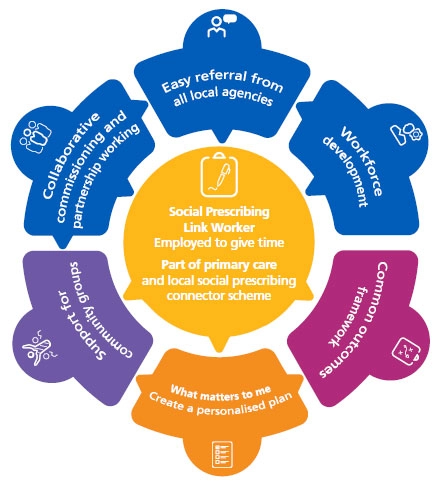
Early concepts of Social Prescribing in the UK date back to the 1920’s with the Peckham Experiment. It became more widely recognized in the mid-2000s. Social Prescribing was adopted as a national NHS strategy through their Long Term Plan, beginning in 2019.
It gained a foothold in the US shortly thereafter with pilot programs like CultureRx in Massachusetts (starting 2019) and the establishment of Social Prescribing USA (SPUSA) in 2022.
Social Isolation in the U.S.
An overview from the CDC shows us about 1 in 3 adults report feeling lonely, and 1 in 4 report not having social and emotional support.

According to the CDC, individuals most at risk for experiencing social isolation are those with limited or no access to resources. Reasons include living in rural areas, having limited transportation or language barriers. Additional high-risk factors include facing the loss of a loved one, a divorce, unemployment, or having a mental or physical challenge like a chronic disease or condition, or long-term disability.
Some people groups are more at-risk than others, including older adults, low-income adults, and adults living alone.
The related health risks are substantial, and include increased risks of heart disease and stroke, type 2 diabetes, depression and anxiety, dementia, suicidality and self-harm, and earlier death.
In one particularly alarming statement from 2023’s “Our Epidemic of Loneliness and Isolation” released by the CDC, US Surgeon General, Dr. Vivek H. Murthy noted;
“The mortality impact of being socially disconnected is similar to that caused by smoking up to 15 cigarettes a day.”
Social Isolation in Michigan
Key Findings on Social Isolation in Michigan (from MichiganMedicine.org):
- Prevalence: In 2024, 29% of older Michigan adults (50-80) reported feeling isolated, and 33% reported feeling lonely some or all of the time.
- Friendship Gaps: While 88% of Michiganders 50+ have at least one close friend, 24% reported not having enough close friends.
- Mental/Physical Health Link: Nearly 50% of older adults with fair or poor mental health reported lacking enough close friends, and more than 7 in 10 reported feelings of loneliness.
Vulnerable Populations: Individuals living below 150% of the poverty line, those with physical disabilities, and those in rural areas face higher risks.
Local Issues and Solutions
Newaygo County is 100% rural, with the entire northern half covered by the Manistee National Forest. It spans over 860 square miles and includes five small towns along with several smaller townships.
While a beautiful place to live, it also brings real challenges. Extreme weather which drives up heat and energy costs, long distances along dirt roads and a shortage of housing. Additionally, the recent closure of the Hi-Lites Shoppers Guide, which was the primary source of local information for many.
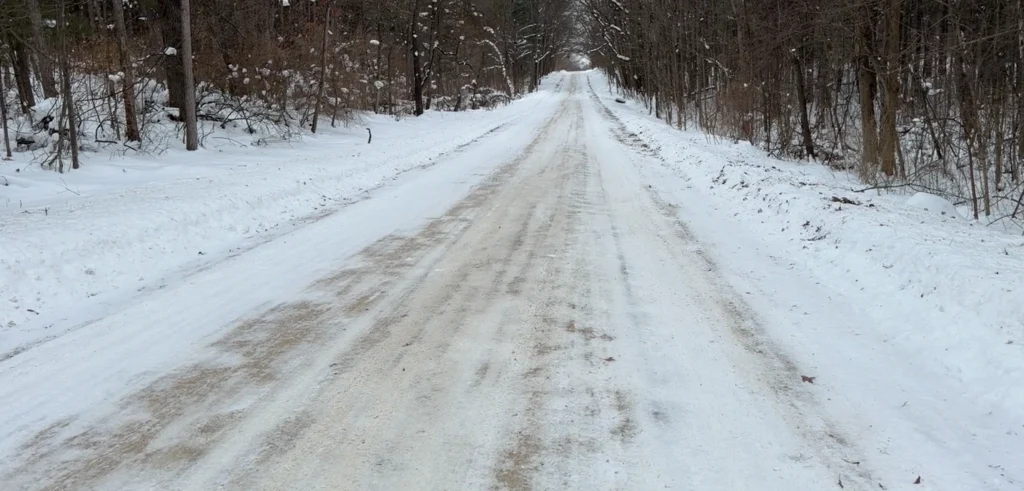
All of these things and more, combine to make Social Isolation a real threat to our aging population. Many of our older adults are in high-risk categories. These include being low-income, living alone, and having unreliable internet availability and cell phone reception. These, combined with limited or no access to resources and having limited transportation are a perfect recipe for isolation.
Also, by comparison; neighboring Kent County offers over 200 resources for aging adults, with Newaygo County, only having a few.
The Missing Piece
TrueNorth started their Community Connections program a few years ago. The goal is to offer activities and opportunities for older Newaygo County adults facing social isolation to get connected. It was quickly realized a key component was missing. A connector between those experiencing social isolation and the programs and services available to them, was needed.
A grant from the Enterprise Foundation offered TrueNorth the finances to be able to start the ENGAGE! Program. This funding, part of their Thome Aging Well Program allowed TrueNorth to hire Link Workers. Their job is to seek out and connect older isolated adults in Newaygo County to programming and social opportunities. These may happen at TrueNorth, or a variety of other local organizations as well.
How Social Prescribing Actually Works
While the UK model is top-down, with a government-funded healthcare system doing the “prescribing”, it looks and operates a little differently here in the U.S..
TrueNorth’s Link Workers work not only with local healthcare providers, but also with frontline workers. These include hairdressers, social workers, pharmacists and anyone else who works with or encounters isolated older adults.
There are no doctors writing prescriptions for “social interaction” for their patients. Rather, there is a network of concerned citizens referring people to ENGAGE! Link Workers.
Since Social Prescribing is still relatively new to the U.S., healthcare professionals are just now starting to understand the benefits of a holistic approach to their patients’ well-being. Accordingly, they are slowly embracing and utilizing programs like ENGAGE!
Speaking of ENGAGE!…
The first thing TrueNorth staff ask individuals when they come in is;
“What matters to you?”, as opposed to“What’s wrong with you?”
It all starts with a friendly conversation, often over a cup of coffee. Basically, we find out what they want to do, how they can expand their social circle and how Link Workers can come alongside them on that path.
ENGAGE! is that connector piece between isolated older adults and the myriad of opportunities to get involved, meet people and expand their social circles in Newaygo County. This can happen at programming offered through TrueNorth’s Community Connections, in addition to any number of other local organizations, like the Commission on Aging, One Township at a Time, or Wellspring Adult Day Services, just to name a few.
A Real-Life Story
One woman in particular, who was referred to ENGAGE! by her daughter, had recently lost her husband. As a result, she was withdrawn and isolated without a lot of real-world skills needed to navigate the world.
A TrueNorth’s Link Worker started working with her to find out what she was interested in. After learning of her lack of knowledge of simple things, like how to put gas in her own car, staff came alongside her and offered education. Initially, she was only comfortable going to one gas station… the one she knew, which really limited how far she was comfortably willing to travel for any reason, much less for social events.
Today, she attends programming at TrueNorth three or four days a week and has a whole new set of friends and social connections.
How to Get Involved
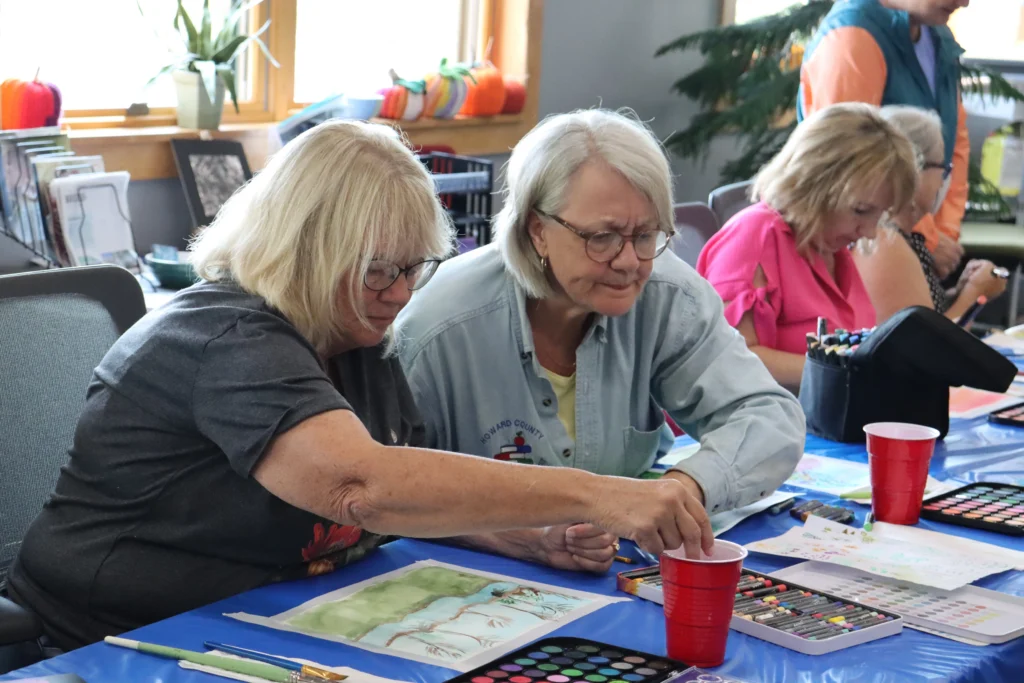
There are any number of ways to connect, depending on how you want to get involved. For example, If you know an older adult in Newaygo County who is suffering from social isolation, you can contact TrueNorth. An ENGAGE! Link Worker will make the initial contact with that adult and start the process. Additionally, you may refer a relative, a neighbor, a client or a patient. Not only that, but you may even do a self-referral.
There are also a number of ways to get involved as a volunteer, helping isolated older adults in Newaygo County find new purpose and build new social connections. A socially connected population is a healthy one – physically, emotionally and mentally.
Visit www.truenorthservices.org/engage or call (231) 924-0641 and ask to speak with an ENGAGE! staff member.
Discover more from TrueNorth Community Services
Subscribe to get the latest posts sent to your email.