

 TNLisaDaniell
Addressing Food Insecurity One Row at a Time
Food insecurity continues to plague Americans everywhere. Large numbers of people regularly access resources at food banks and pantries, like the TrueNorth Food Center. The negative impacts of food insecurity are staggering. They include higher risks of chronic conditions like diabetes, heart disease and high blood pressure. They also make communities less healthy, productive and resilient.
Accessing fresh produce is one of the most difficult things for people experiencing food insecurity. It is one of the reasons a program like TrueNorth’s Plant-a-Row for Hunger is so important. It also makes the prospect of home gardening much more appealing and even necessary for those facing food insecurity.
Continue reading to learn more about the impacts of food insecurity, TrueNorth’s Food Center, their Plant-a-Row for Hunger Campaign and trends in home gardening.
Hunger in America
The USDA reports nearly 14% of US Households were food insecure at least some time during the year, in 2024. In a report from that year, they define “very low food security” as the more severe range of food insecurity. This is when one or more household members experience reduced food intake and disrupted eating patterns because of limited money or other resources for food. In 2024, 5.4 percent of households experienced very low food security.
According to Feeding America, in 2024 alone, 48 million people faced food insecurity. Additionally, 50+ million turned to food banks and pantries for help. This includes 1 in 5 children. Children are particularly susceptible to the negative impacts of food insecurity because their brains and bodies are still developing. Among children, food insecurity is associated with higher incidents of several negative health issues. These include anemia, asthma, depression and anxiety, cognitive and behavioral problems and a higher risk of being hospitalized.
There are a number of reasons for food insecurity. Lack of transit, safe places or good schools can make it harder for families to get the food they need. Low pay, job loss or having a disability can make it hard for even working families to afford enough food. When rent, health care, utility bills and child care cost more, families often have less to spend on food. All of these issues continue to make food insecurity a pressing issue for low-income Americans.
Hunger in Michigan
According to America’s Health Rankings from the United Health Foundation, Michigan ranks 41st in the nation in food insecurity.
Feeding America reports the food insecurity rate in Michigan sits at over 15%, slightly higher than the national average. This represents over a million and half people.
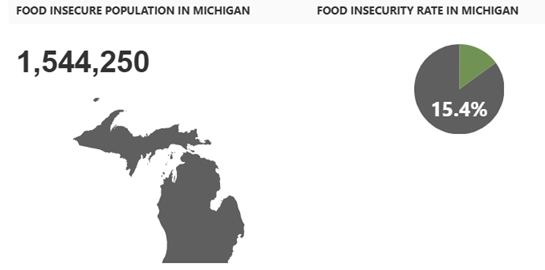
The Supplemental Nutrition Assistance Program (SNAP) formally known as food stamps, provides monthly, low-income household benefits. In Michigan, these are typically provided via an Electronic Benefits Transfer (EBT) card, known as a Bridge Card. Among food insecure people in Michigan, 37% are above the SNAP threshold. This means even though they are in fact, food insecure, they do not qualify for SNAP assistance.
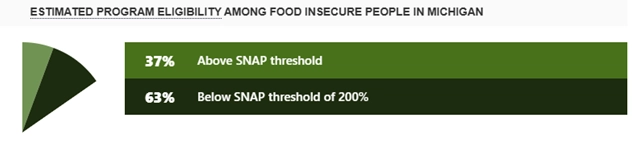
Needing assistance and yet not qualifying for it further exacerbates an already untenable situation for many Michiganders. This further stretches already strained budgets and creates even more stress for those involved.
Hunger Locally
Feeding America reports the food insecurity rate in Newaygo County as 16.3%. They also report over 75% of households as being below the SNAP threshold, meaning they qualify for food assistance. Lastly, they report the annual food budget shortfall in Newaygo County is over $5.1 million. Those are staggering numbers.
Hunger relief programming at TrueNorth reflects these numbers. Their self-select Food Center averages 7,311 individual assists per month representing 2,041 households. Additionally, the twice-a-month Mobile Food Pantry visits from Feeding America average 735 individuals representing 258 households, per truck.
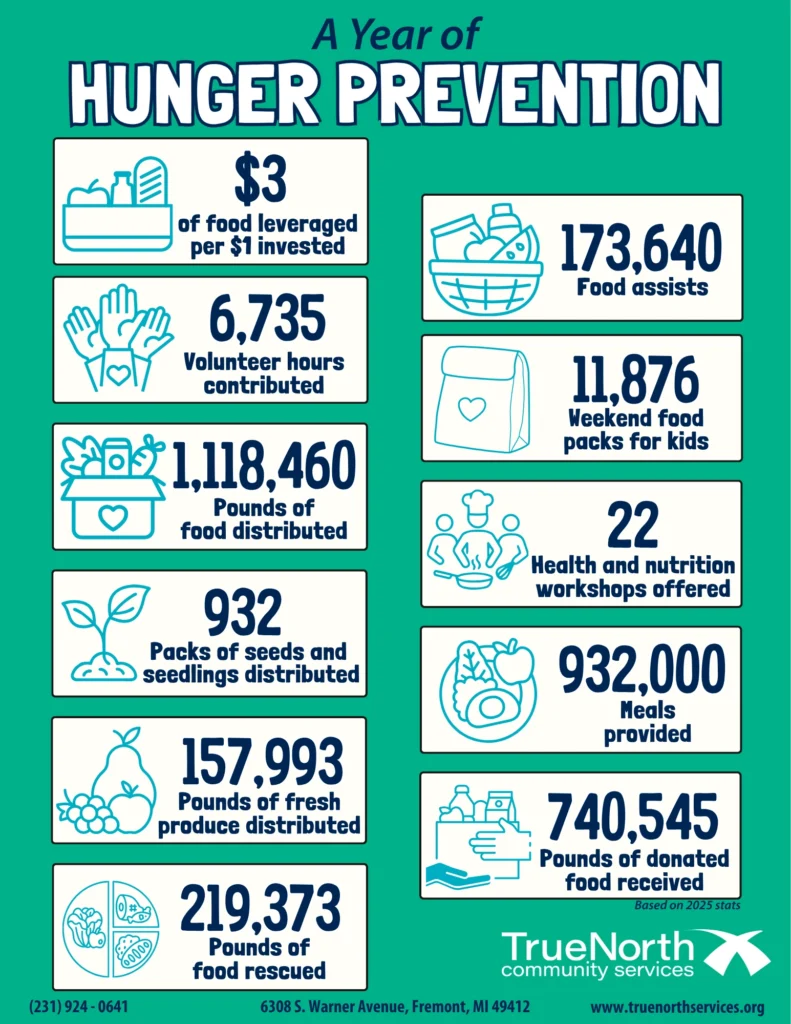
TrueNorth counts on donations from generous local people to be able to keep the shelves stocked. In an average year, 740,545 lbs. of food is donated, including 5,756 lbs. of fresh produce. In an average year, they distribute 1,118,460 lbs. of food to local people including 157,993 lbs. of fresh produce. Why do we mention fresh produce? Simply because it is the one food item people experiencing food insecurity most need, and are least likely to be able to obtain.
Fresh Produce
The World Health Organisation’s (WHO) recommendations for a healthy diet include consuming at least 400 g of a range of fruits and vegetables daily.
The National Library of Medicine tells us the Dietary Guidelines for Americans recommend you make one-half of your plate fruits and vegetables. Diets high in fruits and vegetables are widely recommended for their health-promoting properties. Fruits and vegetables have historically held a place in dietary guidance because of their concentrations of vitamins, especially vitamins C and A; minerals, especially electrolytes; and more recently phytochemicals, especially antioxidants. Additionally, fruits and vegetables are recommended as an excellent source of dietary fiber.
According to The Case for Fresh Produce from Brown University Health, “Fresh seasonal produce is always better for you since it is allowed to ripen naturally, rather than being picked early and sent to stores. Plants that have more exposure to the sun often contain higher levels of antioxidants.”
It is for these reasons, TrueNorth promotes its annual Plant-a-Row for Hunger campaign.
Plant-a-Row
The good garden’s tradition of sharing excess with those in need is the impetus for this initiative. TrueNorth asks local farmers and gardeners to consider planting an extra row with the intent to donate the extra produce. Every year, the Plant-a-Row for Hunger campaign brings in over 9,000 lbs. of fresh produce to the Food Center. As previously stated, this is a vital component of a healthy diet. With food costs at an all-time high, these donations are more important than ever.
An additional component of this campaign is donating seeds to local people for gardening purposes. This serves two functions; First, To encourage local gardeners to take part in the Plant-a-Row campaign. Second, To encourage local people experiencing food insecurity to start their own home gardens, often for the first time. Newaygo County is rural and the opportunity to grow one’s own food, in their own yard is possible. It is also a great step towards becoming self-sufficient.
Home Gardening
According to a study entitled Home Food Gardening: US Market Trends & Opportunities by Freedonia Group, growing fresh produce at home is an increasingly more popular trend, particularly with grocery costs continuing to rise. They report people are planting food gardens for a number of reasons. They believe produce grown at home is healthier and more nutritious, it tastes better, and they want to know where their food comes from.
This trend has seen a sharp uptick, post-pandemic. The supply shortages that followed drew increased attention to the potential of home gardening to improve food security and nutrition.
A report on home gardening published by the National Library of Medicine pointed out a number of interesting and relevant points. In an evaluation of a home gardening initiative in San Jose, CA, participants reported increased vegetable consumption, gardening-related physical activity, cost savings and new and strengthened connections with neighbours. Having a home garden not only provides low-cost fresh produce for your home, it’s also just good for you. Additionally, it is empowering.
A Local Story
Using seeds she received from TrueNorth, Amanda V. and her husband started a home garden… for the first time ever.
“It gave my husband more of a sense of purpose at home helping the family. A garden was a great way for him to ‘give back’ to his family.”
Together, they grew tomatoes, cucumbers, broccoli, cabbage, herbs, and peppers.
“So many peppers! We used all methods to preserve food; canning, drying, freezing, you name it.”
They were even able to provide some of their excess to four other local families in need.

To learn more about Hunger Prevention services at TrueNorth, including their Food Center and the Plant-a-Row for Hunger campaign, visit www.truenorthservices.org/hunger-prevention-programs.
Discover more from TrueNorth Community Services
Subscribe to get the latest posts sent to your email.