All kids love the zoo, and there are several great ones in Michigan. This fall, students from Project FOCUS Out-of-School Time Programs in Baldwin, took a field trip to the Detroit Zoo. They even had the opportunity for special experiences most people never get to enjoy thanks to Mike Reed, a zoologist at the Detroit Zoo.
Mike, who summers in the Baldwin area, was able to provide the students from both the elementary and junior high school unique behind-the-scenes experiences. They were able to learn how the zookeepers prepare food for the animals at the Zoo’s Commissary. “It was nice to go to the back rooms to see how they operate the zoo,” said Tabby, a 6th grader at Baldwin Junior High School. “I liked looking in the freezer to see what the animals ate.”
Some of the highlights for the elementary students included seeing a tiger and brown bears, the reptile house, the gorilla exhibit along with the “Comparing Primates” interactive piece and the walk-through of the “Outback Experience” where kangaroos and wallabies were freely roaming, which delighted the kids! “I liked seeing the flamingos best,” said Zaelyk, a first grader at Baldwin Elementary.
The junior high school students were excited to see the butterfly house and many animals they would never see in Baldwin.
Site Coordinator, Cecelia Hamilton, said, “By having these experiences, we want students to start thinking about the many interesting career opportunities available to them.”
A generous community donor allowed for Jersey Mike’s sub meals to be provided for all the students for dinner and a local Wesco donated five dozen donuts and bottled water.
Evan, a kindergartener, said, “My favorite part was the kangaroos… and the donuts!”
For Leighan Campeau, giving back to her community has always been a priority. She has seen the needs of her neighbors and works to help them through donating and volunteering at TrueNorth.
“We always thought it was important to give and to help people,” says Leighan about why she and her family support TrueNorth. “My husband and I feel like we are very fortunate in circumstances and in life, and so that’s why we want to make sure we always help people.” Leighan and her husband have been long-time donors at TrueNorth and have started giving monthly to make an even greater impact.
Leighan has also started giving through her time by volunteering at TrueNorth’s Food Center. From being a friendly face helping participants, to stocking shelves and helping wherever is needed, Leighan continues to better her community. She has volunteered over 225 hours since starting in early 2023. Leighan says, “The need is great…being able to help out makes me feel good.”
Not only does Leighan personally help her neighbors, but she also gets her two sons involved to teach the importance of giving back. Leighan and one of her sons most recently helped pack backpacks for Tools for School this past summer–helping provide school supplies to area children in need.
“It just helps us all realize together that there is a need,” reflects Leighan on the importance of volunteering as a family. “There are others that struggle, and if you can help out, you should.”
You can join caring people like Leighan by supporting TrueNorth’s Generate Generosity campaign. Launching on Giving Tuesday, join us for a day of volunteerism at the TrueNorth Service Center. Our goal is to engage 100 donors and 300 volunteers by the end of 2024, and we need your help!Donate or volunteer today to personally offer a hand up to our neighbors in need.
Michelle’s Vibrant Future with Stable Housing Secured
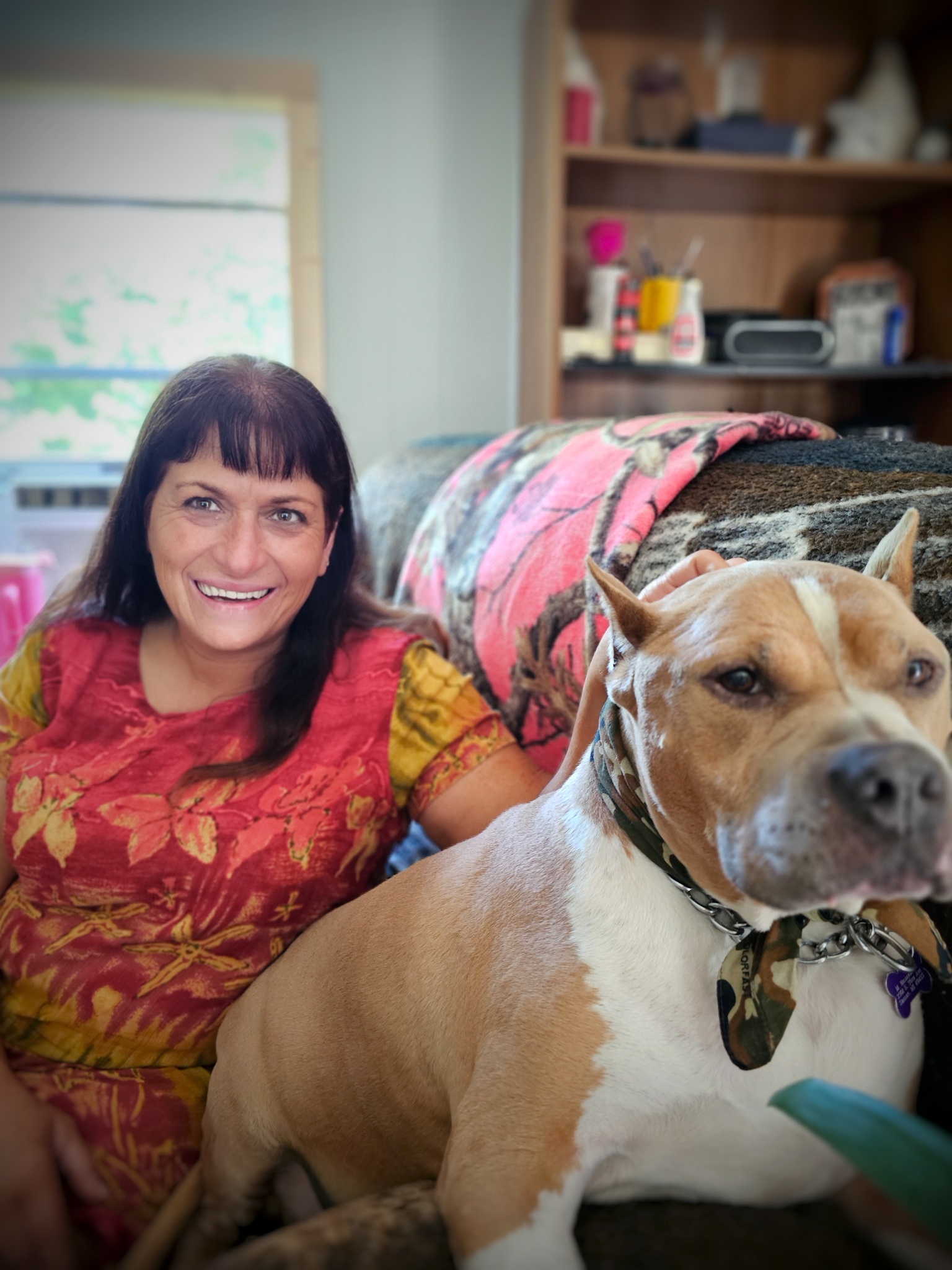
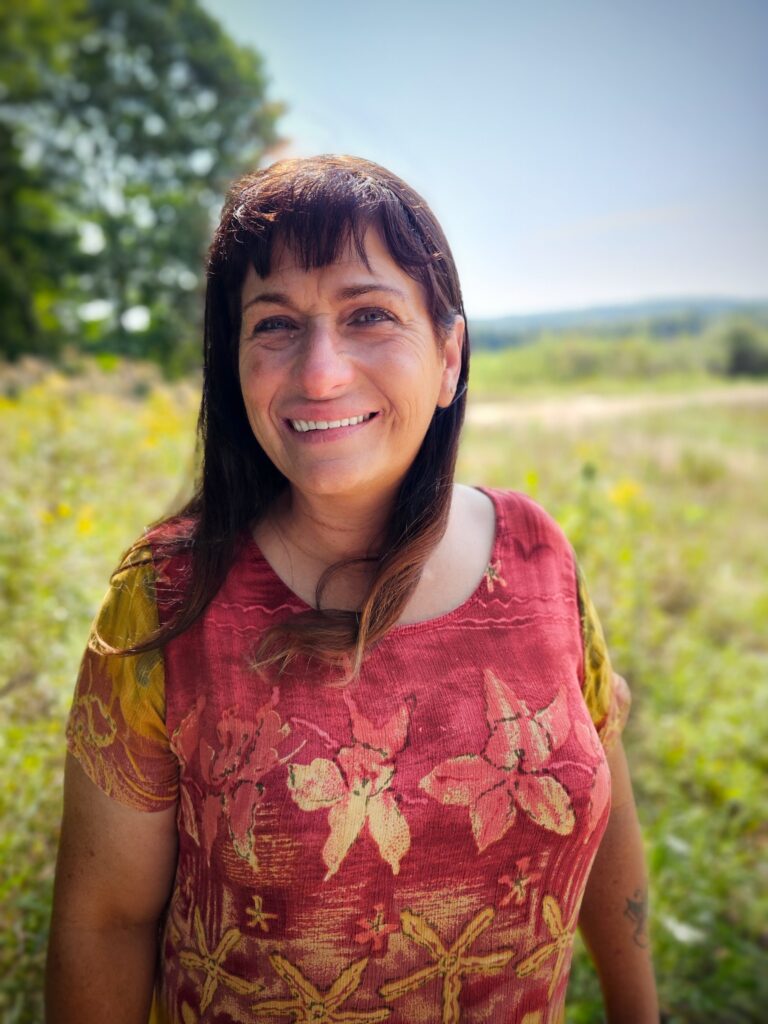
“It’s not a lack of ambition or a lack of effort. Calling and saying I’m homeless…that was a huge step,” says Michelle, a participant in TrueNorth’s Housing Resource Center, about the challenges she faced while experiencing homelessness. “That was one of the hardest things about going to TrueNorth–I didn’t want people looking at me as homeless because of the stereotype.”
Stories of people like Michelle illustrate the importance of Homeless Awareness Month. Many in our community experience similar challenges as Michelle and need a hand-up to live and thrive.
Not only did Michelle experience financial difficulties, her living conditions put both her health and safety at risk. One of the greatest challenges Michelle faced was not having access to water. Michelle’s Home Health Aide had to bring in water and help Michelle heat it so she could perform basic necessities such as bathe and clean.
Before coming to TrueNorth, Michelle lived in a fifth-wheel trailer, that was unsuitable for living, for three years. She faced a number of health-related obstacles and was living on a fixed income, making it challenging to make ends meet. Michelle says, “I knew there was no way I could ever pay rent and bills and car insurance on my income. It’ll never ever happen.”
Winters were especially difficult due to inefficient heating and the trailer’s dangerous, icy steps. There were even times when the trailer’s windows and door had frost on the inside. “But with my health, the steps, the cold in the winter, to try and heat it, honestly you’re not meant to live in it. There’s not a lot of insulation in the walls,” recounts Michelle about the unsafe living conditions in her trailer.
When Michelle came to TrueNorth for help, she was afraid to call because of the negative stereotypes surrounding those who experience homelessness: “People stereotype homelessness without a doubt,” says Michelle. “Just because I was homeless doesn’t mean I’m a bad person, that I was a drug addict, that I didn’t care, that I didn’t try, that I was doing things with money that I shouldn’t.”
Thankfully, Michelle did call TrueNorth and received the encouragement and guidance she needed to move forward on her path to self-sufficiency. Michelle’s hard work and determination led her to find safe housing with support from TrueNorth. Now, being housed for over a year, Michelle can focus on her health and overall well-being.
Michelle cares deeply for her community and has started volunteering since being housed. She currently volunteers at the Oceana County Department of Veterans Affairs office, Hart VFW Auxiliary #1329, and is Senior Vice President of District 12 Auxiliary. Having secure housing has allowed Michelle to follow her passions and give back to the community she now calls home.
“To be able to get into a place where I can maintain my bills, my car insurance, you know be able to go to my appointments, it’s life-changing,” reflects Michelle on the impact having safe housing has had on her.
You can ensure people like Michelle receive the guidance and support necessary to improve their lives. Whether you donate, volunteer, advocate or help in any way you can, you can be confident you are impacting lives for a lifetime.
“People stereotype homelessness without a doubt,” says TrueNorth Housing Resource Center participant, Michelle. “Just because I was homeless doesn’t mean I’m a bad person, that I was a drug addict, that I didn’t care, that I didn’t try, that I was doing things with money that I shouldn’t…That was one of the hardest things about going to TrueNorth–I didn’t want people looking at me as homeless because of the stereotype.”
Stories of people like Michelle are the reason Homeless Awareness Month is so important. Unfortunately, there is a high percentage of people experiencing homelessness in rural West Michigan. By understanding homelessness and the realities of those who experience it, we can join together to give our neighbors the hand up they need to live and thrive.
Today, Michelle has been living safely in her new home for over a year thanks to her hard work, determination and guidance from TrueNorth. Keep reading to learn more about Homeless Awareness Month, homelessness in rural West Michigan and how you can help change the lives of people like Michelle.
What is Homeless Awareness Month?
Homeless Awareness Month occurs every November in Michigan “to raise awareness about issues relating to housing insecurity and homelessness and to get communities invested in making a difference,” as the Michigan Coalition Against Homelessness (MCAH) explains. Unfortunately, there are common misconceptions and stereotypes surrounding people who experience housing insecurity and homelessness. This movement works to fight those misconceptions by raising awareness through education and empathy.
Michigan communities need to work together to end homelessness. Having this month to put a spotlight on the realities of people experiencing housing insecurity and homelessness is crucial to the movement, but there needs to be year-round support to make a true difference.
Snapshot of Homelessness in Rural West Michigan
Homelessness takes a number of different forms. From sleeping on park benches to living in tents in national forests, many of our neighbors need a hand up. Rural homelessness comes with unique challenges that differ from urban homelessness.
Affordable housing is difficult to find in rural communities. According to the National Low Income Housing Coalition’s Housing Needs in Rural Communities factsheet, this lack of affordable housing can be attributed to “more persistent levels of poverty, lower incomes and increased costs associated with infrastructure needs.” Renters especially face these difficulties. The National Low Income Coalition calculates that one person working minimum wage at $10.33 per hour would have to work 72 hours a week to afford a one bedroom rental home at fair market rent in Michigan. With rural areas already having a high percentage of low-income households, there is a great need for housing support.
People experiencing homelessness in rural communities tend to live in tents, trailers and other makeshift housing that is not suitable for living. This especially becomes dangerous during the cold Michigan winters where people do not have adequate heating or no heating at all. Learn more about these challenges by reading a few stories of people who have experienced homelessness below.
Real Stories of People Who Have Experienced Homelessness
Homelessness is a reality many face in rural West Michigan. Read the stories below to walk in the shoes of TrueNorth Housing Resource Center participants on their journeys to safe housing.
Michelle’s Story
Before coming to TrueNorth, Michelle had been living in a fifth wheel trailer for three years while living on a fixed income. Michelle has a number of health concerns which were difficult to manage in the trailer.
One of the greatest challenges Michelle faced was not having access to water. Michelle’s Home Health Aide had to bring in water and help Michelle heat it so that she could do basic necessities such as bathe and clean.
Having the support and guidance from TrueNorth helped Michelle find the safe housing she needed. Now living in safe housing for over a year, Michelle has been able to take care of her health and volunteers in her community.
“To be able to get into a place where I can maintain my bills, my car insurance, you know be able to go to my appointments, it’s life-changing,” says Michelle about the impact having safe housing has had on her.
Joe’s Story
For Joe, having the support and guidance of TrueNorth made all the difference in his journey to find housing.
Joe had lost his home and spent time in and out of the hospital and rehabilitation facilities for health reasons. He became connected to TrueNorth after he was found living in his storage unit with nowhere else to go.
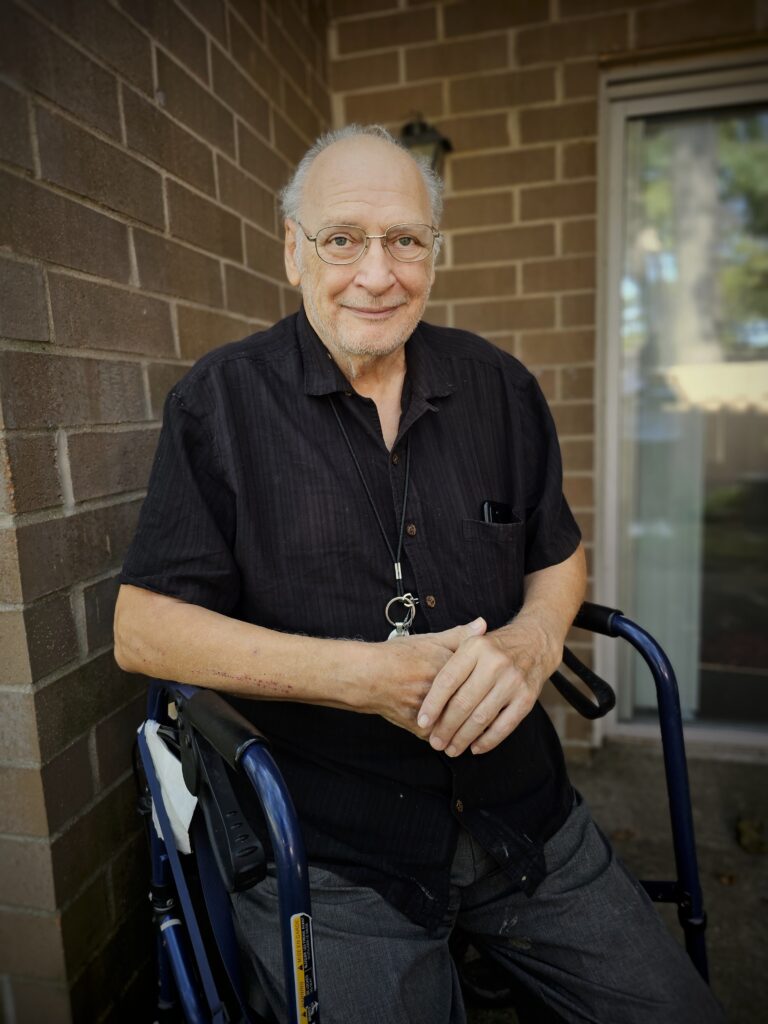
Having step-by-step guidance from TrueNorth was critical to Joe finding housing, especially with his health conditions. Joe is legally blind and has mobility issues, needing a walker to get around safely. TrueNorth helped with all of his housing applications and anything else needed.
Joe’s journey to safe housing took many twists and turns, but one thing remained consistent–the guidance and encouragement from TrueNorth. From putting Joe up in a hotel to visiting him at a campsite he was staying at, TrueNorth was there when he had no one. Today, Joe is living safely in his new home with a brighter future ahead.
Joe says, “I’m just looking forward to being able to live like a human being once more.”
Janet’s Story
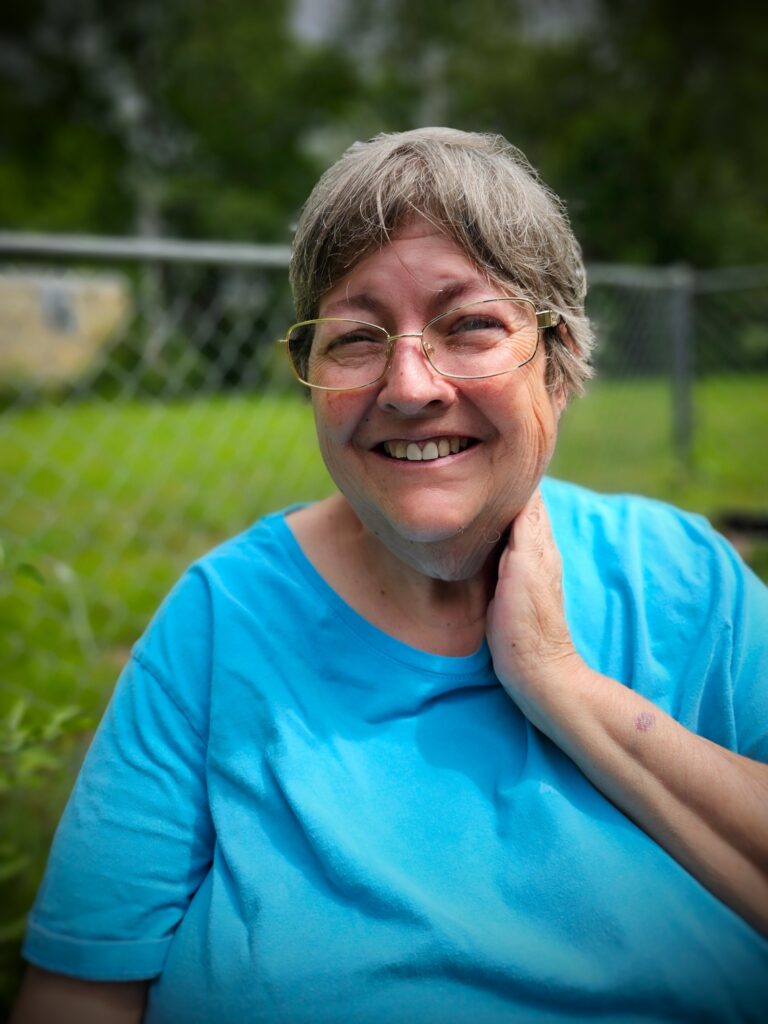
“Had I stayed in the car much longer, I probably would not be here,” says Janet about her poor health while she was experiencing homelessness. “Because I’ve got a home now, I’m more stable. I can get to doctor’s appointments.”
Having safe housing has improved Janet’s health tremendously. Before she had housing, she was unable to receive the surgery she needed because the hospital would not release her if she did not have a secure residence. Thankfully, Janet found the trailer rental she has now been living in for over two years and has been able to take care of her health concerns.
Not only has Janet improved her health and well-being, but she has also made her community more vibrant. She has a great relationship with her neighbors, especially the kids as she makes and gives out goody bags for holidays and is just another good presence in their area. “There’s a light at the end of the tunnel,” Janet says when reflecting on her housing journey and how her life has changed for the better now that she has a safe place to call home.
Help Our Neighbors this Homeless Awareness Month
To help raise awareness for individuals experiencing homelessness and working towards housing stability, TrueNorth has two initiatives: Wear Purple Wednesdays and a Hygiene Donation Drive.
Purple is the color representing Homeless Awareness Month. Wear Purple Wednesdays calls people to show their support of the movement by wearing purple every Wednesday in November, showing those who are currently experiencing or have experienced homelessness they are not alone.
TrueNorth is also holding a Hygiene Donation Drive to collect essential items for those in need. Collection boxes have been placed at partnering community locations in the five counties where TrueNorth provides homeless solutions: Lake County, Mason County, Muskegon County, Newaygo County and Oceana County.
“The hygiene items collected throughout November are distributed directly to those in need. When participants who are homeless or struggling come to us, it’s incredibly valuable to offer them products they can take to motels or shelters to meet their basic hygiene needs,” says Melissa Geroux, TrueNorth’s Housing Services Director. “These items are greatly appreciated, as they help participants restore a sense of dignity and pride by enabling them to practice self-care.”
How You Can Give a Hand Up this Homeless Awareness Month
There are a number of opportunities for you to give a hand up to our neighbors in need. You can participate in TrueNorth’s initiatives by wearing purple each Wednesday in November and join other caring supporters like yourself. The collection boxes will also be at the locations listed above for hygiene item donations. You can also make a difference by volunteering or making a gift to help move our neighbors forward on their paths to resilience.
A high percentage of Michigan youth are in need of safe spaces to be when not in school. To meet this need, Out-of-School Time programs have been created to provide safe spaces along with opportunities for further enrichment. Lights On Afterschool is a national movement that brings awareness to these vital programs and the impact they have on children, families and communities.
Check out the rest of the article to learn more about Out-of-School Time, Lights On Afterschool and how you can make an impact on the next generation.
What is Out-of-School Time Programming?
Oftentimes, Out-of-School Time (OST) programming is misunderstood as being the same as childcare. There are noticeable differences between the two, however. According to the Michigan Afterschool Partnership (MASP), OST programs “provide safe places for students when their families are not available, as well as academic support, enrichment activities, and child and youth development opportunities.” These programs can occur before or after the school day and some programs even offer summer programming opportunities.
While some childcare facilities may have additional learning opportunities, they do not include as comprehensive programming as OST programs do. This doesn’t mean childcare is a poor option for families, just that there are real differences between childcare and OST that need to be acknowledged.
Need for Programming
There is a great need for OST programs in Michigan. A report from America After 3PM reinforces this need finding that, in Michigan, 236,968 children are alone and unsupervised after school. America After 3PM also found that for every child in a program, four are on the waitlist–exemplifying the need for OST programs.
These numbers illustrate how many children need a safe place to go after school. Not only do OST programs provide that safety, but they also enrich children through educational and social opportunities.
Benefits of Out-of-School Time Programming
OST programming benefits children in a number of ways. Comprehensive supports such as adult mentors give children another support system to lean on while also encouraging them to be their best selves. Being able to interact with their peers and learn how to work together is another benefit as America After 3PM Health & Wellness and Afterschool Alliance describe in their article, Promoting Healthy Futures: Afterschool Provides the Supports Parents Want for Children’s Well-Being. Collaboration and communication are examples of life skills children gain at OST programming as they learn and grow alongside each other.
America After 3PM Health & Wellness and Afterschool Alliance also discuss in their article how OST programs “are critical for helping young people navigate childhood and adolescence by providing opportunities to build life skills.” Having a place where children feel safe to ask questions and try new skills and experiences positively impacts them as they encounter change.
Besides building life skills in areas such as communication and relationships, OST programs also teach children how to lead a healthy lifestyle. Many programs provide a meal during programming, ensuring children have the nutrients they need. Programming also can include physical activities that keep children active while learning and having fun. Learning what a healthy lifestyle looks like helps children make healthy decisions now and later in life.
OST programs set children up for success both inside and outside of the classroom. Ultimately, the goal of these programs is to ensure youth are equipped to lead happy, successful lives.
TrueNorth’s Out-of-School Time Programs
At TrueNorth Community Services, we believe every child deserves to have opportunities for growth, resources to thrive and encouragement to be themselves. We strive to provide opportunities for our children to build connections, self-confidence and resilience so that they can flourish. Through initiatives such as our OST Programs, we support the next generation and maintain a legacy of compassionate, forward-thinking leaders.
We have 13 OST programs that offer programming after the school day and during the summer. Enrolled children experience enriching and fun activities in a safe space. From collaborative opportunities to learning new subjects and interests, there are multiple opportunities for growth.
TrueNorth operates Project FOCUS (For Our Children’s Ultimate Success) and Project FOCUS Rural Grit through the federally-funded 21st Century Community Learning Centers Program in partnership with the Michigan Department of Education.Project FOCUS holds programming at Baldwin, Hart, Holton, Muskegon Heights and Walkerville schools. We also offer Project FOCUS Rural Grit in Hesperia and White Cloud schools.
What is Lights On Afterschool?
Lights On Afterschool is a nationwide event that celebrates OST programs and their impact on children, families and communities. The event also raises awareness of the great need for afterschool programming. This event launched in October, 2000, making this the 25th annual Lights On Afterschool event as Afterschool Alliance describes.
OST and afterschool programs celebrate this event in a variety of ways that best suits their participants and communities. There is one similarity throughout each event however–illuminating the importance of having safe places and role models for children after school.
“Lights On Afterschool draws attention to the need for high-quality, high-capacity Out-of-School Time programs both after school hours and in the summer,” says Danielle Siegel, TrueNorth’s Out-of-School Time Program Director. “Not only in our communities, but nationwide, programs have long waiting lists for children to get access to programming–to have a safe place to go after school with a warm meal, positive adult role models, and educational fun!”
One of the greatest impacts of Lights On Afterschool is raising awareness for OST programs. Many in our communities do not directly see the value of these programs or are unaware of their existence. Having this nationwide event opens the door for conversations on the real impact these programs have on area children.
TrueNorth’s Lights On Afterschool Events
All 13 of TrueNorth’s OST sites are holding their own Lights On Afterschool events to celebrate and raise awareness of the program. From painting bowls for a hunger prevention fundraiser to a spooktacular fall fest, each site has a unique and fun twist on the event.
A Look at Lights On Afterschool
Check out these highlights from a few of TrueNorth’s Out-of-School Time programs’ Lights On Afterschool events below!
Having fun at Hesperia Middle School’s event.Gathering at Hesperia Middle School.Hesperia Elementary’s event at Webster Park.Painting bowls at White Cloud Elementary’s and Jr. High’s event.White Cloud Community librarian reading Stone Soup to the kids.Having fun with the student-lead activities at Baldwin Elementary’s and Jr. High’s event.Learning a new activity at Baldwin.Working together to answer questions at the Quiz Table during Baldwin’s event.
Each of these events shared the impact of TrueNorth’s OST programs with parents and community members. We are grateful for all of the support and the opportunity to convey the importance of programming in our communities.
How You Can Impact the Next Generation
You can help ensure the next generation thrives. Whether you donate, volunteeryour time or advocate, you can be confident you are making a real impact on our children. Learn how you can support area youth and make a difference here.
“The Fremont Harvest Festival Hay Art is one of the Fremont community’s favorite events each year,” says Karen Baird, Executive Director of the Fremont Area Chamber of Commerce. “Since the inception of the Hay Art competition, the Fremont Area Chamber and the community has donated over 70,000 pounds of food to TrueNorth’s Hunger Prevention programs. We are grateful for the giving community that we have supporting this event!”
The Fremont Area Chamber of Commerce hosted its annual Hay Art competition during the Fremont Harvest Festival, where local businesses and organizations transform bales of hay into creative works of art. Community members vote for their favorite works of art by donating shelf-stable food items. The donated food helps support the efforts ofTrueNorth Community Services’ Hunger Prevention programs.
Events like this engage our local businesses and organizations, strengthen our community and help bring residents together. This collaboration help build and sustain strong, vibrant communities which are essential for supporting neighbors in times of need.
In total, 5,886.25 pounds of food was donated during the competition. This year, Fremont Middle School won the Hay Art Competition (pictured above far left), by donating 1,934.75 pounds of food.
“These donations make a tremendous difference in the lives of hundreds of food-insecure families and serve as a powerful reminder of our community’s compassion and resilience in the face of challenges,” says Mike Voyt, TrueNorth’s Hunger Prevention and Children’s Services Director.
“[The mentoring program is] really fun, it’s a good way tolearn life skills and meet new people”, says 14 year old mentee Anthony. Anthony and his mentor Kurt have spent the majority of their summer months enjoying the outdoors. From kayaking and paddleboarding, to fishing and swimming, they have embraced the beautiful Michigan weather. Anthony even caught his first ever fish on one of their outings together.
Kurt and Anthony are paired in TrueMentors community-based mentoring program. They initially met this past January, however, it wasn’t until June when they became an official mentoring match. Getting together approximately once a week, they have enjoyed everything from sharing meals together, riding carnival rides and even built a boat out of cardboard and duct tape (that lasted for a short while above water!). This fall they are looking forward to attending some football games and visiting the pumpkin patch together.
Kurt has enjoyed the fact he has been able to develop friendship and trust with Anthony. If you are debating getting involved as a mentor, Kurt has this to share “It’s a great opportunity to be a resource for the community- to help inspire and empower the growth of a child- to lead toward successes in life.”
In addition to community-based mentoring, TrueMentors also offers TrueBlue Academy at Newaygo and White Cloud Public Schools and Parks in Focus. New this fall, TrueMentors, along with Newaygo Elementary, is also launching Lions Together, a mentoring program focused on matching boys ages five to eight with mentors which meets weekly throughout the school year. To learn more about TrueMentors or to become a mentor, contact Serena Lafferty at (231) 924-0641, ext. 174 or slafferty@truenorthservices.org.
In Michigan, a large percentage of households face energy poverty. From energy inefficiencies raising bills to the high cost of living, there are a number of causes and impacts.
Unfortunately, energy poverty leads to families having to make difficult decisions. Deciding between whether to keep your family warm or feed them is an issue too many face. Learn more about energy poverty, its causes and impacts and how you can help our neighbors in need by reading below.
What is Energy Poverty?
As the term itself describes, energy poverty refers to a household’s lack of access to dependable energy services to maintain a healthy standard of living, as Habitat for Humanity describes in their article,What is Energy Poverty?. They go on to describe the energy services needed for living: “adequate heating, hot water, cooling, lighting and the energy to power appliances.” Having access to these energy services is vital to households’ health and well-being.
A household’s energy burden also contributes to whether or not they experience energy poverty. According to the U.S. Department of Energy, energy burden is “the percentage of gross household income spent on energy costs.” This percentage can be found by “dividing the average housing energy cost by the average annual household income.” Having a 6% or greater energy burden classifies households as having a high energy burden, as the U.S Department of Energy describes.
Each household has different experiences with energy poverty. However, there are common causes that lead to high energy burden. Plus, with costs continuing to rise, households face numerous challenges to afford the energy they need to live and thrive.
Energy Poverty Causes
Energy poverty has a number of causes. Having a high energy burden is one of the most common causes as there are a number of factors that can contribute. From homes being energy inefficient to socioeconomic challenges, there are multiple ways a household’s energy burden can increase.
Inefficiencies that Create a High Energy Burden
Homes with energy inefficiencies will have a higher energy burden than those that do not. Older homes that have poor insulation or old heating and cooling systems will use more energy than necessary because of these issues.
Inefficient appliances can also contribute to a high energy burden. These appliances need more energy to function than efficient ones. Unfortunately, low-income households typically cannot afford the most efficient appliances. Having efficient appliances being inaccessible to those who need them most contributes to the high energy burdens seen in Michigan.
Socioeconomic Challenges
Social and economic challenges can also create a high energy burden. According to Ariel Drehobl, Lauren Ross and Roxana Ayala in their article, How High Are Household Energy Burdens? An Assessment of National and Metropolitan Energy Burden across the United States, low-income households typically spend a higher percentage of their income on energy bills than high-income households. This is due to low-income households having to use the appliances they can afford. Unfortunately, these tend to be inefficient and use large amounts of energy. In contrast, while high-income households typically use large amounts of energy, they have more efficient appliances and won’t spend as high of a percentage of their income on energy bills. Energy burdens like this are more common for rural households, older adults and families with children as Drehobl, Ross and Ayala note in their article.
High-cost fuels such as propane, which is commonly used in rural areas, can also contribute to a high energy burden. For low-income households, having this high cost to keep their family safe and warm can create difficult decisions. No one should have to decide whether to keep their lights on or fix a car to be able to get to work. Unfortunately, this happens all too often.
Renter Challenges
Renters face unique energy challenges as well. According to the Michigan Statewide Housing Needs Assessment by the University of Michigan and Michigan State Housing Development Authority (MSHDA), a large percentage of renters in 2022 had a high housing cost burden. Findings from the study show that “51% of renters were housing cost-burdened (spending more than 30% of income on housing) and 26% were severely housing cost-burdened (spending more than half of income on housing).” When renters are already spending more of their income on housing, that leaves less for other necessities such as food and energy. Plus, landlords ultimately decide on rental updates and need to have buy-in to make their units more energy efficient. This is another barrier for low-income renters as potential savings on energy bills are unavailable because they cannot make those energy efficiency upgrades themselves, as the U.S. Department of Energy describes.
Rural Challenges
Rural Michigan communities face additional energy challenges. As seen above, home energy inefficiencies are a major cause of a high energy burden. Unfortunately, this is prominent in rural areas. People live in places such as mobile homes and old farmhouses that are not equipped for healthy living. But, because these are the places they can afford, they suffer higher energy costs because of these energy inefficiencies.
Overall, there are a number of factors that contribute to a high energy burden that often leads to energy poverty. Keep reading to learn more about the impacts energy poverty has on our neighbors in Michigan.
Impacts
Energy poverty impacts the well-being of those experiencing it. From physical health detriments to poor mental health, there are numerous effects.
Physical Health Effects
A high percentage of households experiencing energy poverty live in unhealthy housing as Drehobl, Ross and Ayala discuss in their article. They go on to describe how “inefficient housing is associated with other health impacts, such as carbon monoxide poisoning, lead exposure, thermal discomfort, and respiratory problems such as asthma and chronic obstructive pulmonary disease (COPD); it is also associated with the potential for hypothermia and/or heat stress resulting from leaky and/or unrepaired heating and cooling equipment.” While these health effects are not all directly caused by energy poverty, many who have high energy burdens also may experience these health risks as well, ultimately contributing to their poor well-being.
Energy coping strategies can also contribute to negative health risks. Using additional heating sources such as stoves, ovens and space heaters can create safety risks and make residents uncomfortable as Drehobl, Ross and Ayala describe in their article. These coping strategies do not help lessen bills, so while they can help keep residents warm, their bills will remain unmanageable without the right support. No one should have to rely on these measures to keep warm, and because of these experiences, many suffer from poor mental health.
Mental Health Effects
Chronic stress, anxiety and depression can result from energy poverty. Drehobl, Ross and Ayala discuss in their article how the fear and uncertainty of not having dependable, affordable energy can negatively impact mental health. Navigating assistance programs can also be challenging, especially when people are still trying to keep their lights on, take care of their family and get the help they need. Thankfully, there are resources to help those experiencing energy poverty that will also guide people throughout the process, so they can receive the help they need to move forward.
Energy Poverty Assistance
There are a number of ways to help households become energy secure. While each situation is different, there are resources available to help those facing various challenges.
Programs like TrueNorth’s emPower program and assistance programs such as LIHEAP (Low Income Home Energy Assistance Program), WAP (Weatherization Assistance Program) and MEAP (Michigan Energy Assistance Program) are available to assist people experiencing energy poverty and high energy burdens. Take a look at the Coalition to Keep Michigan Warm’s fact sheet on energy assistance to learn more about the available resources.
Legislation impacts the amount of assistance available to those experiencing energy poverty. There are three Senate bills that propose updates to MEAP, as the Coalition to Keep Michigan Warm outlines their potential impacts:
Senate Bill 353: This bill proposes to “expand eligibility and streamline operations.” SB 353 would expand the income qualifications to assist more households and bring structural improvements that will lessen administrative burdens.
Senate Bill 880: This bill proposes to “increase annual funding and promote statewide reach.” SB 880 would allow the Michigan Public Service Commission to “increase the amount of assistance funding collected on an annual basis,” helping more households and providing more flexibility for “all electric providers to participate in the delivery of assistance funding through MEAP.”
Senate Bill 881: This bill proposes to “ensure equitable access to funding.” SB 881 would require that the assistance funds would be used in the area where they were collected, ensuring everyone has access to energy assistance.
Being aware of these proposed policy reforms is one of the ways you can help those experiencing energy poverty in Michigan. For more information on these bills and assistance programs, go to the Coalition to Keep Michigan Warm’s website.
How to Help End Energy Poverty in Michigan
TrueNorth Community Services strives to keep Michigan communities safe and warm while guiding our neighbors on their paths to self-sufficiency. You can ensure our neighbors are equipped to remain energy secure. There are numerous ways you can get involved and make a lasting impact.
TrueNorth’s Initiatives
At TrueNorth, we meet our neighbors where they are. No one should have to decide whether to keep their family warm or afford another necessity.
TrueNorth’s emPower Division Director, Marissa Boerman, describes the realities of participants who experience energy poverty: “The unfortunate reality is that many of our neighbors are unsure if they will have electric or heat when they get home because there is just not enough money to pay all the bills. Our neighbors are having to make decisions with significant health and safety impacts–pay the heat bill or fix their car so they can continue to go to work to earn an income or put food on their table. This is energy poverty–unaffordable bills, the risk of electric and heat shut off or inability to obtain deliverable fuels, and having to cut significant comfort and safety corners in an effort to afford or maintain utility service.”
To meet this need, TrueNorth’s emPower program provides heat and energy assistance for the entire state of Michigan. We help provide direct-assistance payments and enroll participants in affordable payment plans to help people get back on their feet. Participants can receive assistance with electric, natural gas, propane, wood, pellets, fuel oil, coal and other fuels.
emPower also emphasizes self-sufficiency as we walk alongside those in need and guide them on their paths to resilience. The purpose of emPower’s Self-Sufficiency Program is to help participants and their families improve their financial health and quality of life. TrueNorth Self-Sufficiency advisors will meet with their participants to set goals in areas such as improving credit scores, budgeting, enrolling in educational programs, finding employment among numerous others. In doing so, we can equip participants to move forward after they complete the program.
emPower Impacts
In the past grant year, running from October 1, 2023 to September 30, 2024, we have served 8,350 households by direct assistance. See more impacts below:
Number of Applications Received: 8,584
Number of Heat and Energy Calls Received: 24,653
Number of Households Enrolled in an Affordable Payment Plan: 1,789
Number of Emergency Cases Serviced: 56
Number of Resource Referrals Made: 6,632
Number of Long-Term Participant Centered Goals that Were Achieved: 142
These numbers show a small part of the impact these services have on participants’ lives. But, for people like Donna, receiving this hand up can be life-changing. “I am looking so forward to actually getting back to what anybody else would call a normal life,” says Donna when reflecting on how the program has impacted her. “One that’s not directed by constant medical visits and the total worries.” With support from caring people like you, people just like Donna can receive the support they need to improve their lives. Donna with her Self-Sufficiency advisor.
Donna with her Self-Sufficiency advisor.
How You Can Make a Difference
You can secure the well-being of our community. Whether you donate, volunteer or advocate for those in need, you can be confident you are building vibrant communities throughout Michigan. Together, we can keep our neighbors in need healthy, safe and warm as they further themselves on their paths to resilience.
Since 2000, TrueNorth Community Services has held its signature Hunger Prevention fundraiser, Empty Bowls, to fight food insecurity and hunger in our community. This year’s fundraiser is the 25th annual Empty Bowls event we have held to help our neighbors in need.
Keep reading to learn more about the event, its history and how you can get involved to make a difference.
What is Empty Bowls?
Empty Bowls brings together compassionate community members for a simple lunch of soup and bread. Those who attend the event will also take home a hand-painted bowl as a reminder of all of the empty bowls in our community. This fundraiser works to raise funds to support TrueNorth’s Hunger Prevention programs while also building awareness of food insecurity in our community.
Unfortunately, there is a high percentage of food insecure individuals and families in Newaygo County and West Michigan in general. This is why the event is built around the symbolism of the empty bowl. By focusing on the needs of our neighbors and seeing that need represented in a hand-painted bowl, we can build awareness and support for those experiencing hunger and food insecurity.
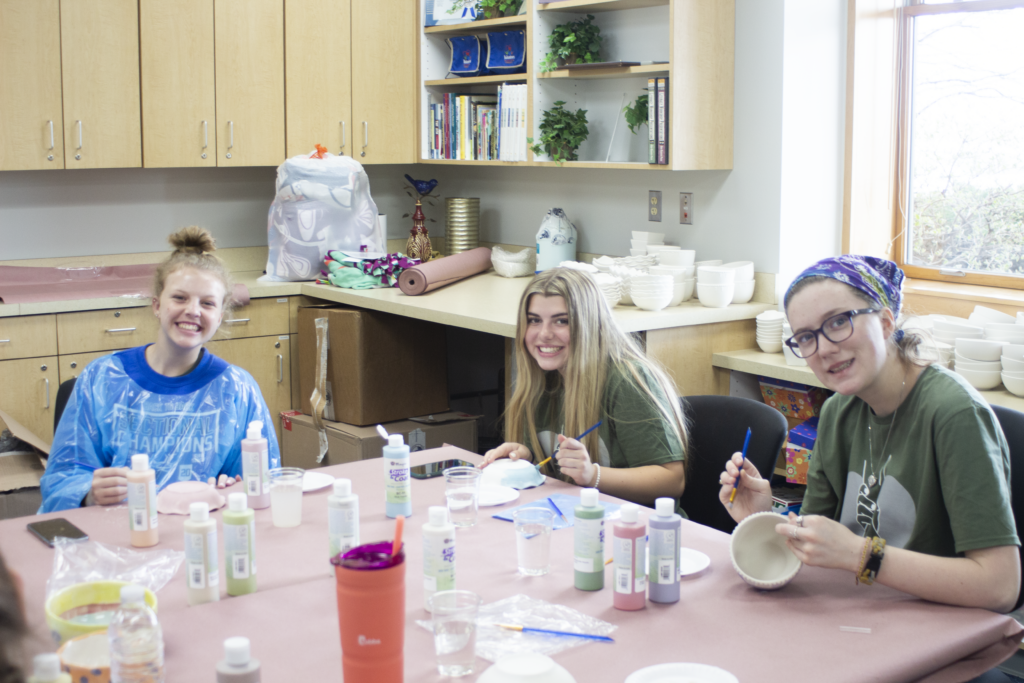
At TrueNorth, we have volunteers, local students and artists paint the bowls which we distribute at the event. Having the community involved in the entire process of the event has helped further the reach of Empty Bowls to make each years’ event a success.
Student volunteers painting bowls.
One of the bowls at the 2023 event.
History of Empty Bowls
So, where did Empty Bowls originate from? This international grassroots movement began at Lahser High School in Bloomfield Hills, Michigan. In 1990, John Hartom, a high school art teacher, co-founded Empty Bowls with his wife, Lisa Blackburn. They worked together to create the event to support their local food drive after learning there was a need in their district. Hartom’s students created 120 ceramic bowls to use at a simple soup luncheon fundraiser at the high school. Staff members from the school came and selected a hand-made bowl. Hartom’s students also assisted with the event.
Hartom remarks on how he and his wife closed out the first event, leading to the project’s remarkable growth:
“Lisa and I said a few words as the event was closing. We shared some hunger statistics and information about how the donation would help the organization receiving the proceeds from the event and then surprised the guests by asking them ‘to keep the bowl they had selected as a reminder of all the empty bowls in the world.’ The room went silent. People looked at one another, then at their bowl. Some lifted their bowl to their chest. Some people wept. Lisa and I shared a look, both stunned by the atmosphere. When we got home we declared to one another that ‘this cannot end here.’ The Empty Bowls Project was born.”
The funds raised at the dinner benefited a local food drive, but the impact of this movement has reached so many more. This Empty Bowls movement has spread across the country as hundreds of organizations hold their own events to fight food insecurity in their communities. According to Hartom, Empty Bowls events have taken place in all 50 states and in more than 20 other countries.
TrueNorth’s History
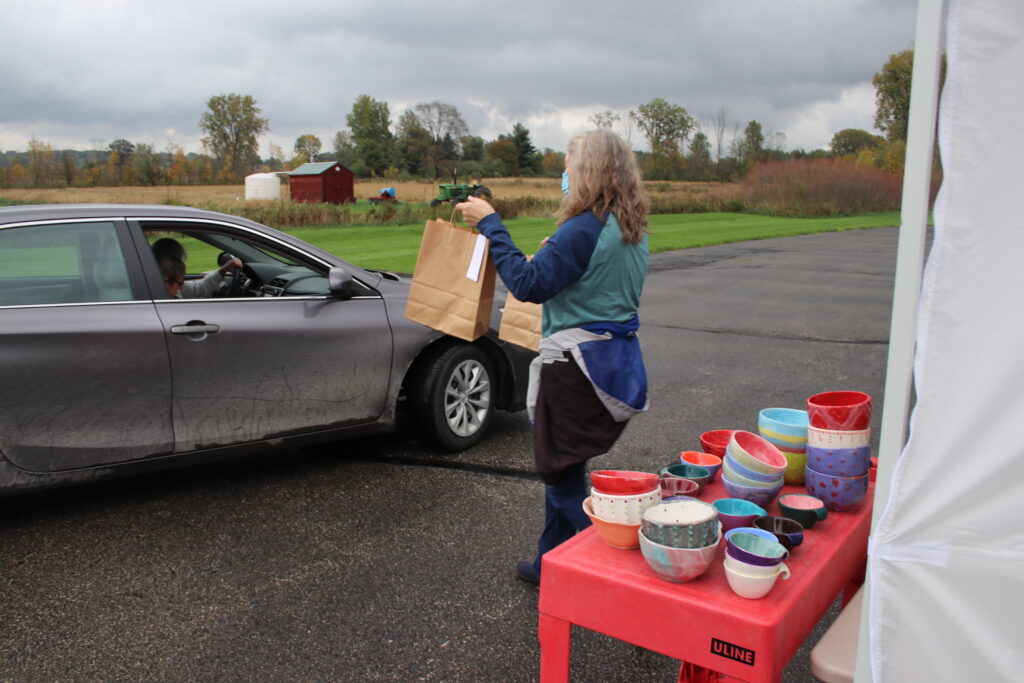
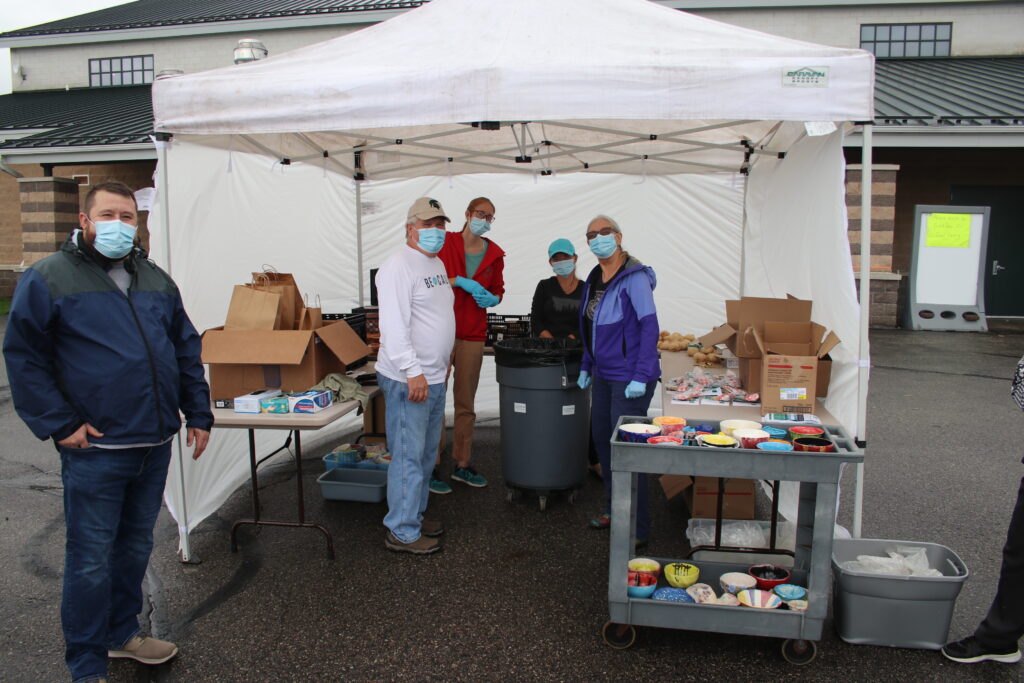
TrueNorth first started its own Empty Bowls event in 2000 by the recommendation of local art teachers who had heard about the movement. The event has grown over the years. From having celebrity bowl auctions in the early 2000’s to adding a “Stuff the Carts” donation option in 2011, where people could purchase needed items for our Food Center, the event has evolved to meet the growing needs of our community. Even during the pandemic, we continued the tradition to meet the increased need for food by having a drive-thru Empty Bowls event in 2021.
TrueNorth staff and volunteers distributing soup lunches and bowls at the 2021 Empty Bowls event.
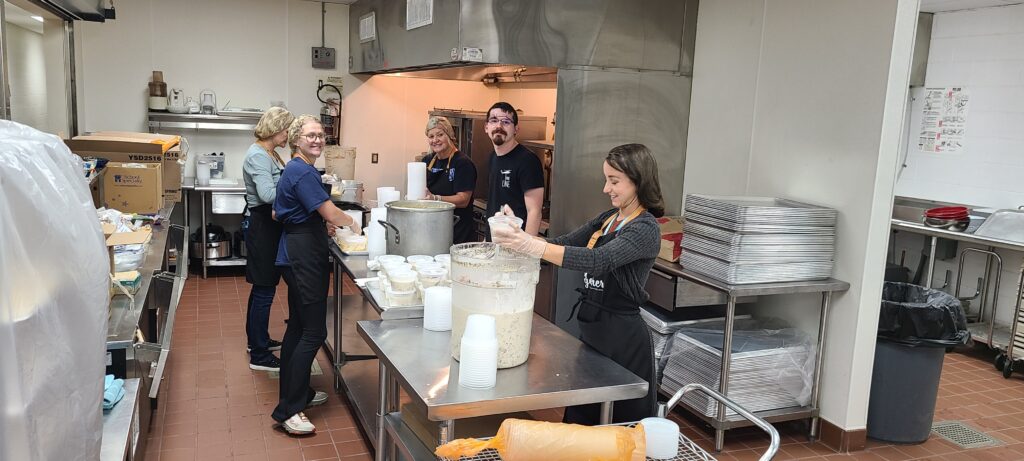
This year, we are excited to hold two Empty Bowls events, one in Fremont and the other in Newaygo. We are also engaging with local schools for the second year by delivering soup to teachers and staff so they have an opportunity to get involved.
TrueNorth staff and volunteers packaging soup to be delivered to participating teachers and staff.
Why TrueNorth Continues the Tradition
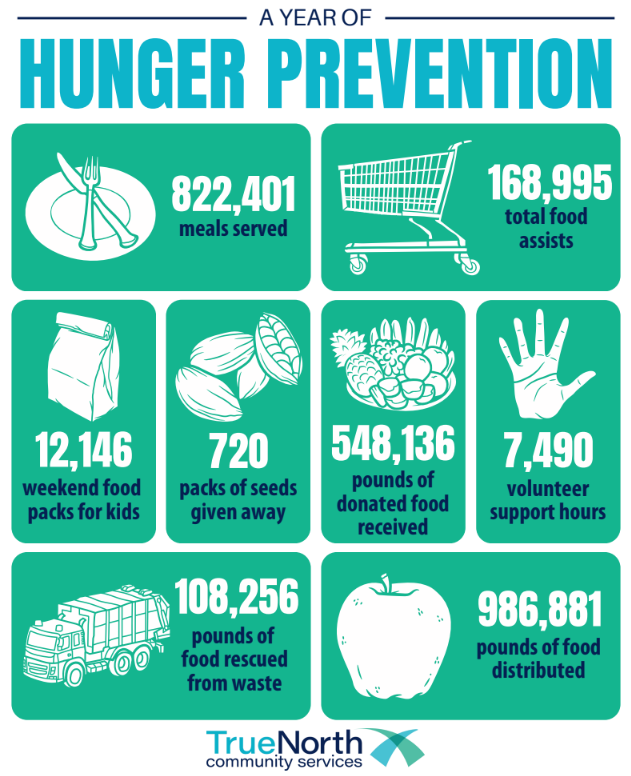
We continue to hold our Empty Bowls soup luncheon fundraiser to meet the growing needs of our community. Food insecurity continues to be a local issue as costs rise and incomes remain the same. Take a look at the infographic below to see how we served our community in 2023 by meeting the needs of our neighbors.
How You Can Fill Our Neighbors’ Empty Bowls
You can move our neighbors forward by attending Empty Bowls. Held in early October each year, this soup luncheon fundraiser brings together community supporters to help end hunger in our community.
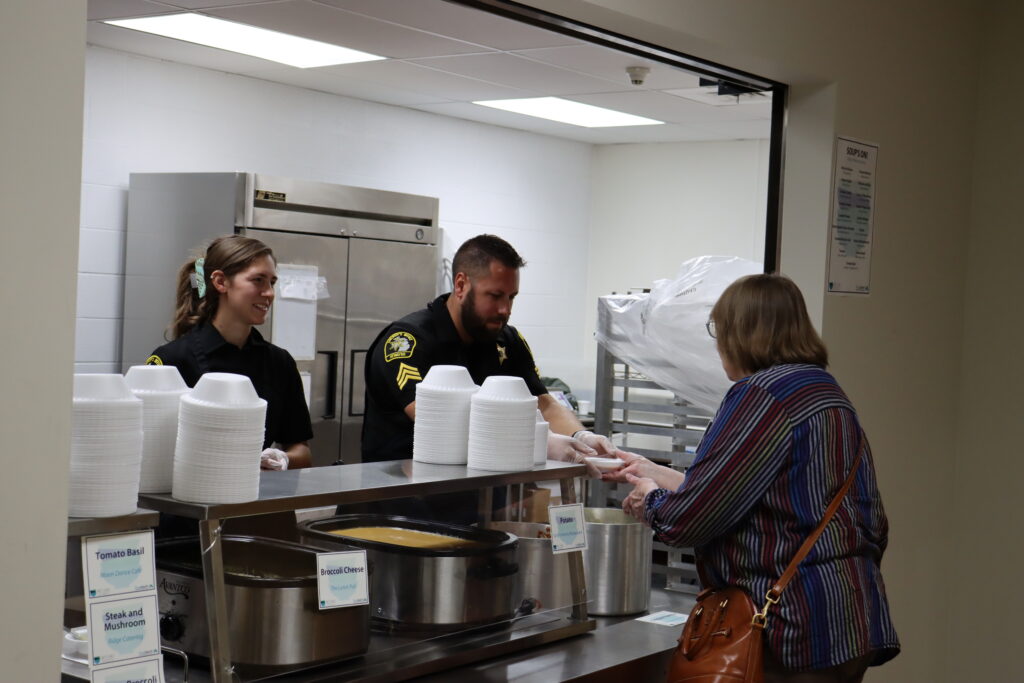
Event participant receiving soup from Newaygo County Law Enforcement Officers volunteering.
Tickets and sponsorships are still available to support the 2024 Empty Bowls event. All of the funds raised will support our Hunger Prevention programs, such as: on-site Food Center, Mobile Food Pantry, Senior Thanksgiving Luncheon, Senior Harvest Baskets, Weekend PowerPacks and more.
You can give our neighbors in need a hand up. Not only will your attendance help feed the hungry, but it will also give peace of mind to those who otherwise would not know where their next meal is coming from. Join us on either Thursday, October 3 at the TrueNorth Service Center in Fremont or on Friday, October 4 at the VFW Post 4249 in Newaygo.Register today to help us fight hunger, one bowl at a time.
A program of TrueNorth Community Services, Camp Newaygo prides itself on being the community’s camp. Along with being a popular location for school trips, community meetings, and weddings, Camp Newaygo hosts events that allow our community to come together and enjoy the outdoors.
Not only do these events give families a fun outing, they also thrive on the community support of local businesses, organizations and individuals. This fall, Camp’s annual, 3-day Halloweekend Festival will come together thanks to donations from local farms of pumpkins and apples, groups decorating spooky cabins throughout October, and plenty of volunteers helping facilitate the fun during the event.
Camp Newaygo hosts Girlfriends’ Getaway – a 3 day retreat the first weekend in both October and May. Local women and folks from across Michigan come to enjoy a weekend of relaxation, activities and great food-thanks to Ridge Catering. Camp features local vendors and businesses by contracting with massage therapists, artists and local fitness instructors – all adding to the experience of the retreat.
With talented staff and excellent facilities, Camp Newaygo also partners with other, local organizations for programs and events. For the second year in a row, Lang Lodge at Camp will be host to the Newaygo County Influential Women in Leadership Luncheon. With on-site catering and staff who excel creating phenomenal experiences, Camp Newaygo makes a great partner for organizations looking for a place to host events, parties and fundraisers. Partnering with the luncheon specifically also aligns with Camp Newaygo’s mission to “continue (their) tradition of supporting opportunities for girls and women.”
These are just a few of the many community events that Camp Newaygo hosts. If you are interested in getting involved in your community at Camp Newaygo as a community supporter, contracted vendor, or participant, you can learn more at campnewayg.org/events or contact Scott at slakin@campnewaygo.org.